
How to Pack Antiques for Moving: The Ultimate Professional Guide for 2026


Imagine the sinking feeling of opening a moving crate only to discover your grandmother's 19th-century porcelain tea set in shards because of a single overlooked air gap. It is a scenario that keeps many collectors awake at night, as the emotional value of an heirloom often far outweighs its market price. Learning how to pack antiques for moving isn't just about finding enough bubble wrap; it's about engineering a fail-safe environment for items that have already survived centuries.
We understand that the technical requirements of delicate packing, combined with the confusing jargon of "valuation" versus "insurance," can feel completely overwhelming. You want to ensure your most cherished possessions are handled with the dignity they deserve whilst maintaining total peace of mind. This guide provides a clear, executable plan to master the meticulous art of protecting your most precious heirlooms with our expert-led, multi-layered packing framework. From identifying truly archival-safe materials to navigating the latest 2026 customs regulations, we will show you exactly how to transform a high-stakes transition into a calm, controlled success.
Key Takeaways
Learn the 'Goldfish Method' for creating a photographic inventory that provides indisputable evidence for insurance providers.
Discover how to pack antiques for moving using professional-grade, archival-safe materials that protect delicate finishes from moisture and chemical damage.
Master the art of the three-layer defence system, ensuring fragile glassware and heavy furniture receive tailored protection.
Understand the importance of vibration dampening and strategic loading orders to keep your collection stable throughout the journey.
Explore how professional packing services in Surrey can significantly reduce your insurance premiums whilst providing complete peace of mind.
Table of Contents
The Foundation of a Safe Move: Documentation, Appraisals, and Insurance
The Golden Rules of Packing Materials: Creating a Multi-Layered Defence
Tailored Techniques: How to Pack Furniture, Fine Art, and Delicate Glassware
Beyond the Box: Loading Strategies and Climate Control for Transiting Antiques
Why Professional Packing Services Offer the Ultimate Peace of Mind in Surrey
The Foundation of a Safe Move: Documentation, Appraisals, and Insurance
Before you wrap a single item, you must build a digital fortress around your collection. Whilst you might be eager to learn how to pack antiques for moving, the physical process actually starts with a camera and a clipboard. Professional documentation serves as your primary defence against transit mishaps; it transforms a vague claim into an indisputable fact. By identifying pre-existing condition markers such as hairline cracks in a glaze or the specific patina on a mahogany desk, you establish a clear baseline of liability for the removal process.
This meticulous approach aligns with the broader principles of preserving cultural heritage, ensuring that the history and condition of every piece are respected before they enter the high-stakes environment of a moving van. Without this foundation, even the most expensive packing materials cannot fully protect your financial interests if an accident occurs.
Creating a Meticulous Photographic Inventory
We recommend using the 'Goldfish Method' for your inventory. This involves treating every item as if it were swimming in a bowl, requiring 360-degree views from every possible angle. Capture high-resolution close-ups of delicate joins, signatures, and any existing wear. When photographing smaller collectibles or jewellery, always place a reference object like a 50p piece next to the item to provide an immediate sense of scale for the insurer. Organising these files into digital folders by room will mirror the unpacking process at your new Surrey home, making it much easier to verify the condition of your items upon arrival.
Professional Appraisals and Insurance Nuances
Insurance providers often reject valuations that are older than three years. If your last appraisal was in 2022, it is time for an update. You can find a certified UK appraiser through the British Antique Dealers' Association (BADA) to ensure your documentation carries weight. It's vital to understand the difference between 'replacement value', which covers what it would cost to buy a similar item today, and 'market value', which is what you might get at auction. Standard home contents policies often fail to cover items whilst they are in transit; you must confirm you have specific 'Goods in Transit' coverage. Before the move, ask your removal company these specific questions:
What is your maximum liability limit per individual item?
Does your coverage include 'pairs and sets' clauses?
Are there specific packing requirements I must meet for the insurance to remain valid?
Do you require a high-value inventory sheet for items worth over a certain threshold?
Taking these steps replaces anxiety with a sense of controlled efficiency. You aren't just moving boxes; you're safeguarding a legacy.
The Golden Rules of Packing Materials: Creating a Multi-Layered Defence
Standard packing supplies are designed for modern retail goods, not for 18th-century walnut or delicate Regency gilding. When you are researching how to pack antiques for moving, the term 'archival-safe' is your most vital filter. For any item over 50 years old, standard plastic-based materials can be catastrophic. Standard bubble wrap, whilst excellent for modern electronics, poses a significant risk to French polish finishes. It traps moisture against the surface, creating a greenhouse effect that can lead to 'ghosting' or permanent cloudiness in the wood's finish. Similarly, the acidic ink in newspaper will leach into porous porcelain or marble, leaving stains that are often impossible to remove without professional restoration. Our framework relies on a three-layer system: Surface Wrap for chemical stability, Shock Absorption for impact protection, and a Protective Shell to prevent crushing.
Layer 1: Surface Protection with Acid-Free Materials
Your first layer is about chemical stability and preventing surface abrasion. Acid-free tissue paper and glassine act as a neutral barrier, preventing the transfer of oils or acids from handling. Glassine paper is a pH-neutral, water-resistant barrier specifically used for protecting the delicate surfaces of oil paintings and charcoal drawings. We use a 'mummy wrap' technique for smaller items, where the antique is fully encased in acid-free layers before any adhesive tape is applied. This ensures that no tape ever touches the item itself, avoiding the risk of peeling off delicate gold leaf or veneer when you arrive at your new home. If you are handling exceptionally fragile items, our team can provide the same museum-grade packing materials used by professional curators.
Layer 2 & 3: Shock Absorption and Rigid Outer Shells
Once the surface is secure, you must build a fortress of shock absorption. We recommend following the Smithsonian's guide to moving furniture, which emphasises the need for cushioning that matches the weight of the object. Double-walled corrugated boxes provide the rigid outer shell needed to prevent crushing during the move. For oversized items like longcase clocks or heavy sideboards, bespoke timber crates or heavy-duty furniture blankets offer the necessary structural support. Don't overlook corner protectors; these small cardboard or foam buffers are the most underrated tool in a professional packer's kit. They prevent the chips and dents that frequently occur during tight turns in narrow hallways or stairwells. By combining these layers, you create a controlled environment that isolates your treasure from the vibrations of the road.
Tailored Techniques: How to Pack Furniture, Fine Art, and Delicate Glassware
Generic packing strategies are the primary cause of transit damage. When you are considering how to pack antiques for moving, you must treat each piece as a unique engineering challenge rather than just another item on a checklist. For instance, marquetry and intricate wood inlays are exceptionally sensitive to the slight temperature shifts that occur during transit. Different wood species expand at different rates, which can cause delicate veneers to lift if they aren't properly insulated. Similarly, whilst it's tempting to lock every drawer, old mechanisms can be brittle. We recommend a delicate balance: use the key only if the lock is robust; otherwise, secure the component externally to prevent internal damage.
Antique Furniture and Large Heirlooms
Grandfather clocks require the removal of pendulums and weights to prevent them from becoming wrecking balls inside the casing. Internal cabinet shelves should always be removed and packed separately to prevent them from collapsing under their own weight during a bump. To keep doors and drawers shut without leaving sticky residues, use non-adhesive stretch wrap. This provides tension without the chemical risk of tape. For furniture with cabriole legs, provide extra padding. These elegant, curved supports bear the entire weight of the piece but are particularly vulnerable to lateral pressure during a move.
Fine Art and Oil Paintings
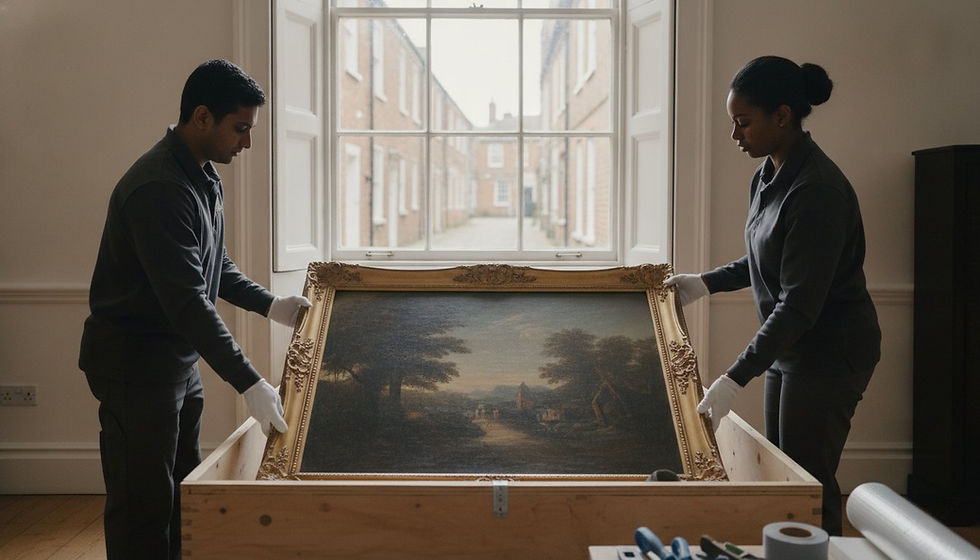
Fine art demands specific protocols to preserve the integrity of the medium. Use the 'Telescopic Box' method for large framed canvases, which involves sliding two heavy-duty cardboard sleeves together to create a custom-fit, rigid shell. Never wrap an oil painting directly in plastic; the lack of breathability can cause moisture to bloom on the surface or cause the paint to stick to the wrap. Always place a glassine barrier against the paint first. For ornate gilt frames, foam 'U-profiles' provide a snug fit around the moulding, protecting delicate plaster details from chipping or cracking.
Fragile Ceramics and Glassware
For the most precarious porcelain and glass, we employ the 'Box-in-Box' method. This involves packing the item in a small box with plenty of cushioning, then placing that box inside a larger container filled with shock-absorbing material. Use the 'burrito' wrapping technique for silver cutlery and saucers, rolling them individually in acid-free paper to prevent metal-on-metal scratching. When packing crystal, pay special attention to the stems. These are the weakest points and must be surrounded by soft padding to withstand the constant vibrations of the removal van. Learn more about our specialist packing services to see how we handle these intricate requirements with professional precision.

Beyond the Box: Loading Strategies and Climate Control for Transiting Antiques
Mastering how to pack antiques for moving is a significant achievement, but the safety of your collection depends equally on what happens inside the removals van. The loading phase is where the physics of transit takes over. Many people don't realise that the loading order is just as critical as the wrapping itself. We avoid placing high-value antiques as the first items loaded or the last items off the van. If an item is first on, it sits deep within the vehicle, making it harder to monitor; if it's the last off, it remains exposed to the elements and the hustle of the moving day for longer than necessary. Our goal is to minimise the time your treasures spend in a transitional state.
The science of vibration dampening also sets professional removals apart from self-drive hire options. Standard hire vans typically use leaf-spring suspension, which is designed for heavy utility loads but offers a punishingly bouncy ride for fragile items. Professional removals vehicles are equipped with air-ride suspension and padded internal rails. These systems absorb the micro-vibrations of the road that can otherwise rattle delicate joins or loosen centuries-old veneer. By choosing a professional service, you are opting for a controlled environment rather than a high-risk gamble on the UK's uneven road surfaces.
Strategic Loading and Weight Distribution
We follow a strict hierarchy when organising the van's interior. Heavy, stable furniture provides the foundation, acting as a secure base for lighter, more fragile boxes. However, weight distribution is a delicate science. We never stack antique chairs; the pressure on the legs and seat frames creates 'joint stress' that can easily snap 100-year-old hide glue. Instead, we use a 'tie-down' rule. This involves using soft-webbing straps to secure items to the van's internal tracking. These straps provide enough tension to prevent shifting whilst remaining soft enough to avoid crushing delicate frames or leaving marks on polished wood.
Climate and Environmental Protection
The 'Surrey Microclimate' presents its own set of challenges, particularly when moving between older, draughty estates and modern, airtight homes. Rapid temperature changes in a van can cause old wood to contract and crack in minutes. To manage this, we use desiccant packs in sealed boxes to regulate moisture levels whilst in transit. This prevents the humidity spikes that lead to mould or wood warping. Our 'Goldfish rule' is simple: we avoid moving exceptionally high-value antiques during extreme weather alerts. If you are concerned about the atmospheric conditions of your upcoming transition, we invite you to book a professional survey to discuss our climate-aware transport options.
Why Professional Packing Services Offer the Ultimate Peace of Mind in Surrey
Whilst we have shared the technical secrets of our trade, the physical execution of these tasks requires a level of stamina and precision that can be taxing during a busy relocation. There is a profound psychological benefit to handing over the 'burden of care' to seasoned professionals. You aren't just paying for boxes and tape; you're investing in the freedom to focus on your new beginning without the constant shadow of anxiety. Moving is stressful. Your antiques shouldn't be. By letting an expert team handle the intricate details, you replace typical industry-related worry with a sense of calm and controlled efficiency.
Professional packing also serves as your strongest financial safeguard. Many premium insurance providers actually require professional intervention for high-value coverage to remain valid. When our team manages the process, the risk of claim rejection drops significantly because every item is packed to museum-grade standards. We treat every mahogany desk, oil painting, and porcelain figurine as if it were our own family favourite heirloom. This boutique approach to Hampshire removals ensures that your collection receives the individual care it deserves, rather than being treated as just another shipment in a large corporate system.
The Value of Expert Fine Art & Antique Moving
Our service provides access to bespoke crating solutions that simply aren't available to the general public. These custom-built timber shells are engineered for the specific dimensions and weight of your most precarious items, providing a level of rigidity that standard cardboard cannot match. Beyond the items themselves, our trained handling techniques protect your own physical health. Moving heavy, awkward antiques requires specific lifting protocols to prevent injury to the owners and damage to the home's architecture. Explore our fine art & antique moving expertise to see how we balance strength with sensitivity.
Tailored Moving Plans for Farnborough and Beyond
Whether you are moving across town or require complex coordination involving storage and international shipping, we provide a structured, predictable journey. We begin with a comprehensive home survey to assess your collection's specific needs in Farnborough or the surrounding Surrey area. This allows us to provide a transparent, fixed-fee quote that includes all specialist packing materials, ensuring there are no hidden costs on moving day. We take the time to explain the rationale behind every method we use, building a layer of trust before the physical work begins. Even if you now understand how to pack antiques for moving, the peace of mind offered by a professional team is incomparable. Request your personal antique moving consultation today and let us protect your legacy.
Safeguarding Your Legacy for the Journey Ahead
Protecting a lifetime of collecting requires more than just careful handling; it demands a structured approach to documentation and a commitment to archival-safe materials. By mastering how to pack antiques for moving through a multi-layered defence system, you ensure that your most fragile heirlooms are isolated from the physical and environmental stresses of transit. Whether it is a Regency sideboard or a delicate porcelain set, your treasures deserve a transition that respects their history and value.
As a trusted local family-run business in Farnborough with over a decade of expert handling experience, we understand the emotional weight of every crate we carry. Our specialist Fine Art & Antique Moving priority service is designed to replace your anxiety with a sense of calm, controlled efficiency. We invite you to Book Your Stress-Free Antique Removal Survey to discuss a tailored plan for your collection. Your move doesn't have to be a source of stress. With the right preparation and a professional hand, your precious items will arrive at your new home exactly as they left your old one, ready to be enjoyed for generations to come.
Frequently Asked Questions
Is it better to leave drawers in antique chests or take them out when moving?
You should remove drawers from antique chests and pack them separately to reduce the overall weight of the frame. This prevents the drawers from sliding out and damaging the runners or the chest's carcass during transit. If you decide to keep them in for smaller items, ensure they are secured with non-adhesive stretch wrap rather than tape, which can strip away delicate veneers or old finishes.
Can I use standard bubble wrap to protect my antique furniture?
You should never apply standard bubble wrap directly to the surface of antique furniture. The plastic can trap moisture and chemicals, causing 'blooming' or permanent cloudy marks on old varnishes and French polish. Instead, always use a primary layer of acid-free tissue paper or a soft cotton moving blanket. This provides a breathable barrier that protects the finish whilst allowing the wood to respond naturally to temperature shifts.
How do I move a grandfather clock without damaging the internal mechanism?
To move a grandfather clock safely, you must remove the weights and the pendulum before the clock is even tilted. These components should be wrapped individually and numbered to ensure they return to their original positions. The internal striking mechanism should be secured with specialised ties or soft foam blocks to prevent the delicate gears from shifting or becoming misaligned during the vibrations of the journey.
What is the best way to pack an oil painting for a local move in Surrey?
The best way to pack an oil painting for a local move is to use a primary layer of glassine paper followed by a rigid cardboard shell. Glassine is pH-neutral and won't stick to the paint surface. Even for short journeys across Surrey, the painting should be placed in a telescopic box to prevent any pressure on the canvas. Never use plastic wrap directly against the artwork as it can cause moisture to bloom on the canvas.
Should I clean or polish my antiques before packing them for a move?
You should lightly dust your antiques with a soft, dry microfibre cloth before packing them. Removing abrasive dust particles prevents them from scratching the surface once the item is wrapped tightly. However, avoid using liquid polishes or waxes immediately before a move. These can remain 'tacky' and cause packing materials to bond to the finish, potentially damaging the patina when you unpack at your new home.
How do I know if my removal company is qualified to handle fine art?
A qualified company will offer a dedicated Fine Art & Antique Moving service rather than just general removals. Check if they provide a 'high-value inventory' sheet and ask about their specific liability limits for individual items. A professional team will be happy to explain their multi-layered packing framework and should be able to provide bespoke crating solutions for your most delicate pieces.
What happens if an antique is damaged during the move despite being packed well?
If an antique is damaged, your photographic inventory becomes your most vital asset. You should immediately compare the item's condition to your 'Goldfish Method' photos and notify the removals team before they leave the site. Because you've documented the pre-existing condition and used professional-grade materials, the claims process with your 'Goods in Transit' provider will be much more straightforward and successful.
How much does professional antique packing typically add to moving costs?
Professional packing services are an investment that often reduces your overall insurance premiums and the risk of claim rejection. Whilst the exact cost depends on the size of your collection, it covers museum-grade materials and the expertise of a team trained in how to pack antiques for moving. For many collectors, the psychological relief of knowing their heirlooms are in expert hands far outweighs the additional expense of the service.


Comments