
How to Move a Piano: A Safe and Professional Guide for 2026

A piano is a precision instrument first and heavy furniture second; treating it with anything less than mechanical respect is a recipe for disaster. We understand that your instrument is likely more than just a possession; it's a delicate masterpiece of engineering and a vessel for cherished memories. It's completely natural to feel anxious about scuffing your polished floorboards or, even worse, causing internal damage to the soundboard whilst in transit. Learning how to move a piano requires a shift in mindset, moving away from brute force and towards controlled, technical precision.
We've designed this guide to help you master the complexities of piano relocation with total confidence. You'll gain access to our expert techniques, a comprehensive list of specialist equipment, and the essential safety protocols used by professional teams to ensure a damage-free move. We'll start by identifying the specific tools you need before walking through the step-by-step process of protecting both your instrument and your home. By the time you've finished reading, you'll have a clear, methodical plan to ensure your piano reaches its new home in perfect harmony.
Key Takeaways
Understand why weight distribution and internal components like the soundboard make pianos precision instruments rather than just heavy furniture.
Discover the essential specialist equipment required for how to move a piano safely, including high-load dollies and the protective "mummy wrap" technique.
Evaluate the hidden risks of DIY attempts by comparing sheer manpower against professional expertise and comprehensive Goods in Transit insurance.
Master the technical "tilt and slide" method to find the instrument's centre of gravity and secure it effectively for a stable transit.
Learn how bespoke removal solutions in Farnborough and Surrey navigate complex property layouts to protect your most valuable possessions.
Table of Contents
The Complexity of Piano Relocation: Why It’s Not Just Heavy Lifting
Moving a piano is a task that demands far more than just physical strength. It's about protecting a complex mechanical system that is as fragile as it is heavy. When you begin researching how to move a piano, it's vital to recognise that you aren't just shifting a piece of furniture; you're transporting a delicate piece of engineering. Most acoustic pianos contain over 12,000 individual parts, including a soundboard and a massive cast-iron frame that supports tonnes of string tension. Any sudden jar or improper pressure can cause the soundboard to crack or the iron frame to fracture, often resulting in an instrument that is beyond economic repair. By understanding the complexity of a piano, you can better appreciate why professional techniques are essential for a successful move.
Weight distribution varies significantly between different models. A grand piano carries its weight horizontally across a wide footprint, whereas an upright piano is notoriously top-heavy and back-heavy. This imbalance makes uprights particularly dangerous for the inexperienced. In the context of a 250kg upright piano, the centre of gravity is the specific point, usually located high and towards the rear, where the instrument's mass is perfectly balanced in all directions. If you lose control of this point during a lift, the piano will tip with a force that is almost impossible to stop manually.
You might notice that your piano has small wheels, or castors, at the base. It's a common mistake to assume these are for transport. Castors are designed solely for minor positioning adjustments within a room, not for the heavy-duty stresses of a full relocation across different floor surfaces. Attempting to roll a heavy upright across a room can snap the legs or permanently gouge your flooring.
Acoustic vs Digital: Identifying Your Instrument
The structural differences between these two types are vast. A digital piano is essentially an electronic device housed in a wooden or plastic shell, usually weighing around 40kg. Most digital models allow for easy disassembly, making them much simpler to manage. Acoustic pianos are a different breed entirely, weighing between 200kg and 500kg. They use a traditional hammer-action system and a heavy internal plate that cannot be taken apart, requiring a much higher level of logistical planning.
The Hidden Risks to Your Property
The weight of an acoustic piano poses a significant threat to your home's integrity. In Surrey homes, we often see "tracking" damage on hardwood floors, where the concentrated pressure of the piano's weight leaves permanent ruts in the timber. Traditional Hampshire cottages present their own challenges, as narrow hallways and low ceilings leave zero margin for error. When you consider that the cost of repairing a cracked soundboard or structural property damage can be ten times the cost of professional transport, the value of expert handling becomes clear.
Specialist Equipment and Pre-Move Preparation
Success in piano relocation is built on a foundation of meticulous preparation and the use of industrial-grade tools. When you are considering how to move a piano, you must look beyond what is available in a standard hardware shop. Precision requires the right kit. A professional piano dolly is non-negotiable. Unlike a basic trolley, these specialised dollies feature non-marking rubber wheels and high-load bearings designed to support upwards of 400kg without buckling. This level of support prevents the frame from warping and protects your hardwood floors from the immense pressure concentrated in the instrument's footprint.
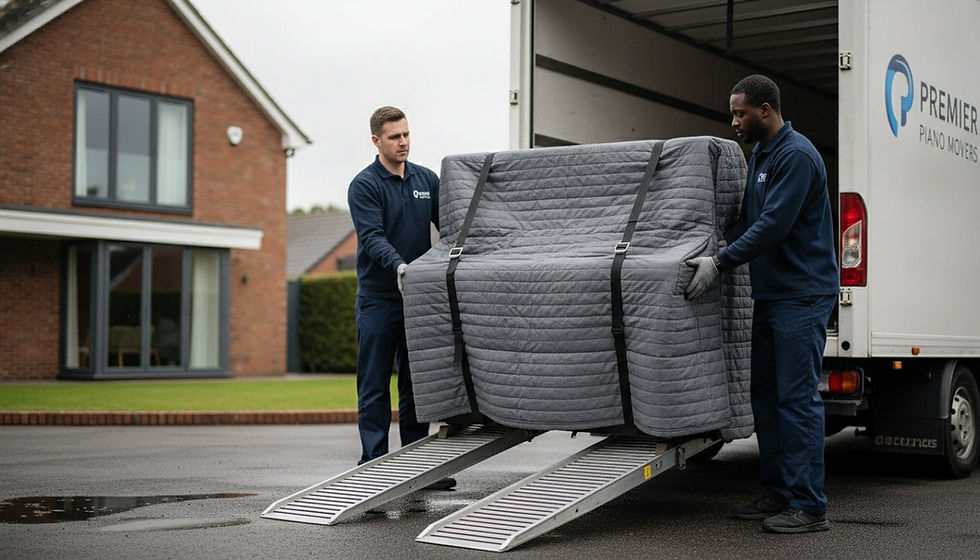
Protection continues with heavy-duty removal blankets. We employ the "mummy wrap" technique, where the instrument is entirely encased in thick, quilted padding to absorb shocks and prevent surface scratches. High-tensile webbing straps then secure this padding, ensuring the keyboard lid and top cover remain immobile. This prevents the internal hammers from shifting during transit, which is a common cause of mechanical failure. Many professional piano movers agree that this level of external security is the only way to safeguard the delicate internal mechanisms from the vibrations of the road.
The Essential Tool Kit for Piano Moving
A professional-grade piano skid, often called a "shoe", is vital for grand pianos to provide a stable surface for the body once the legs are removed. For uprights, we use heavy-duty ramps to navigate single-step thresholds safely. You should never use a standard DIY store trolley; they lack the structural integrity for a 300kg instrument and often have plastic wheels that can shatter under load, leading to a catastrophic drop.
Preparing the Instrument for Transit
Before the first lift, we secure the keyboard lid to prevent the keys from being depressed and the hammers from striking the strings whilst the piano is tilted. We also wrap the pedals in protective film to avoid snags on carpets or structural stress. Finally, we clear a "flight path" through your home. This involves measuring every doorway, staircase, and tight corner amongst your furniture to ensure a steady, unobstructed journey. If the logistics feel daunting, our expert packing services can handle the entire preparation phase for you, ensuring every inch of your instrument is protected.

DIY vs Professional Removals: Weighing the Risks
Whilst a DIY approach might seem like a practical way to save money, it often introduces layers of risk that aren't immediately obvious. Many homeowners assume that gathering four or five strong friends is the best way to tackle the challenge of how to move a piano, but sheer manpower is no substitute for technical expertise. In tight spaces, having too many people can actually be counterproductive. It leads to crowded corridors and miscommunication, which is exactly how accidents happen. If you're following a step-by-step guide to moving a piano, you'll quickly see that coordination and an understanding of balance points are far more vital than brute strength.
The reality of Goods in Transit insurance is another significant differentiator. Most standard home insurance policies don't cover your possessions whilst they're being moved by non-professionals. If a DIY team drops the instrument, you're left to foot the bill for both the piano repairs and any damage to your property. The physical toll is also a serious concern. Pianos don't have handles, and their irregular weight distribution often leads to acute spinal strain or crushed fingers for those who haven't been trained in industrial lifting techniques. Ultimately, the modest cost of professional transport serves as a comprehensive insurance policy against the thousands of pounds you might otherwise spend on instrument repairs or property restoration.
The Hidden Costs of DIY Mistakes
Mistakes during a move can be expensive. We've seen DIY attempts result in deep gouges in hardwood floors that require professional sanding and sealing, often costing more than the removal itself. A single drop can cause a mechanical catastrophe, snapping the internal iron frame or permanently de-tuning the soundboard. To mitigate these risks, professional movers in Surrey use vehicles equipped with hydraulic tail-lifts. This avoids the steep, dangerous angles of manual ramps and ensures the instrument remains level at all times.
When to Absolutely Call the Experts
Some scenarios are simply too dangerous for an amateur team. If your move involves navigating more than two consecutive steps, you need specialist equipment like a stair-climbing trolley or a crane. High-value antiques, such as a Steinway or Bechstein, require a level of delicate handling that only seasoned experts can provide. Moves involving multi-storey apartment blocks or tight internal lifts also demand a professional touch to ensure the instrument doesn't become wedged or damaged in transit.
The Step-by-Step Process for Moving an Upright Piano
The actual mechanics of moving an upright piano require a blend of physics and clear communication. Once the instrument is wrapped, the team executes the "tilt and slide". This involves one person stabilising the back whilst another gently tilts the piano just enough to slide the dolly underneath. It’s crucial to position the dolly exactly under the centre of gravity to prevent the instrument from tipping during transit. When you are learning how to move a piano, this transition from the floor to the dolly is the most critical moment for both safety and instrument protection.
After positioning, we secure the instrument to the dolly using industrial ratchet straps. This creates a single, stable unit that won't shift when encountering uneven surfaces or door thresholds. Mastering the technique of how to move a piano involves understanding that momentum is your enemy; slow, controlled movements are the only way to ensure the instrument's safety. To ensure absolute control, we use a "Four-Point" communication system. Every movement is prefaced by a verbal cue from the lead mover, which is then confirmed by the rest of the team. This synchronisation is vital when navigating gravel paths or internal ramps, ensuring the load remains perfectly level at all times.
Loading and Securing in the Removal Vehicle
A professional removal vehicle is equipped with a hydraulic tail-lift, which provides a smooth vertical transition from the ground to the van floor. This avoids the dangerous angles of manual ramps that can cause the piano to runaway or tip. Once inside, we cleat the piano directly to the side-rails of the van. This prevents any lateral movement during the journey. To protect the polished finish from strap friction, we always use "soft ties" made from non-abrasive materials between the webbing and the instrument. If you’d rather leave these technical manoeuvres to the experts, our professional piano moving team is ready to assist.
Post-Move Care: Settling and Tuning
Your piano is a living instrument made of wood and felt, which means it reacts to its environment. After the move, the piano must "acclimatise" to the humidity and temperature of its new room. We recommend a waiting period of at least 2 to 4 weeks before calling a tuner, as the strings and soundboard need time to settle into their new surroundings. For ideal placement in your new Surrey home, avoid positions near radiators or in direct sunlight, as these can cause the wood to warp and the instrument to go out of tune prematurely.
Professional Piano Removal Services in Farnborough and Surrey
Understanding how to move a piano is only half the battle; executing that knowledge with precision requires a team that treats your instrument with the reverence it deserves. At Goldfish Moving & Storage, we don't view a piano as just another piece of heavy furniture. We see it as a delicate masterpiece of engineering and often a priceless family heirloom. Our approach combines traditional service values with modern logistical expertise to ensure your relocation is handled with controlled efficiency. We utilise bespoke equipment, including specialised skids and non-marking dollies, to guarantee that your instrument and your home remain in pristine condition throughout the process.
Our family-run team brings a sense of calm to what is often a high-stress day. We provide the reassurance of comprehensive insurance coverage, positioning ourselves as the primary protectors of your most valuable possessions. Whether you own a modern upright or a concert grand, our methods are designed to provide a steady, unobstructed progression from your old music room to your new one. This dedication to care extends to our wider work in fine art and antique moving, where the same principles of mechanical respect and technical precision apply.
Why Farnborough Residents Trust Goldfish
With over a decade of experience in specialist removals across Guildford, Aldershot, and Fleet, we've developed a deep understanding of the local architectural landscape. We've navigated the narrow corridors of traditional Hampshire cottages and the complex lift access of modern Surrey apartment blocks. Our teams are specifically trained in the mechanics of acoustic instruments, ensuring they understand exactly where the delicate internal stress points lie. This specialist knowledge integrates seamlessly with our wider house removals and storage solutions, providing a single, reliable point of contact for your entire transition.
Booking Your Specialist Move
We believe that transparency is the foundation of trust. To provide you with an accurate, fixed-fee quote, we invite you to share detailed measurements and information about the access at both locations. For complex piano relocations involving stairs or tight turns, we often recommend a pre-move survey. This allows us to identify potential challenges early and prepare the necessary equipment, such as ramps or additional manpower, before the moving day arrives. We take the time to explain our rationale, ensuring you feel confident in our plan before the physical work begins. Book your professional piano move with Goldfish today and let us handle the heavy lifting with the care your instrument deserves.
Ensuring Your Instrument’s Future Harmony
Relocating a piano is a significant undertaking that requires more than just a few pairs of hands; it demands a deep understanding of how to move a piano with technical precision and mechanical respect. By prioritising the right specialist equipment and following a methodical plan, you protect both the delicate internal components of your instrument and the finish of your home. Whether you're navigating a narrow hallway in a Hampshire cottage or a modern Surrey apartment, the focus should always remain on controlled movement rather than brute force.
Since 2012, our family-run team has provided expert care for fine art and antiques across Surrey and Hampshire. With over a decade of specialist moving experience and comprehensive insurance, we offer the professional reassurance you need during such a complex transition. We invite you to Get a Professional Piano Moving Quote to ensure your instrument remains in perfect condition. You've worked hard to maintain your piano's beautiful sound; let's make sure it continues to sing in its new home.
Frequently Asked Questions
How much does it cost to move a piano in the UK?
Professional piano moving costs in the UK typically range from £200 to £1,900 depending on the instrument type and distance. On average, a local move for an upright piano costs around £400. You should expect additional fees for complex access; for instance, many firms charge between £30 and £50 per flight of stairs for an upright piano.
Can you move a piano on its side?
You should never move an upright piano on its side as this can cause permanent internal damage to the action and soundboard. However, grand pianos are specifically designed to be moved on their side once the legs have been removed and the body is secured to a specialist piano board. This technique ensures the instrument's weight is distributed safely across a flat surface during transit.
How many people do you need to move an upright piano?
A minimum of three to four capable adults is required for a DIY move, though professional teams often work in pairs when using specialist equipment. The sheer weight of an upright piano, which can reach 400kg, makes it dangerous for a smaller group to manage. Professionals use high-load dollies and ramps to reduce the need for raw manpower, focusing instead on balance and controlled movement.
Does moving a piano always put it out of tune?
Moving a piano almost always results in it needing a tune, primarily due to changes in humidity and temperature rather than the physical motion. The wooden soundboard expands or contracts in its new environment, which alters the string tension. When considering how to move a piano, factor in a settling period of at least two weeks before booking a tuner to ensure the wood has fully acclimatised.
Do I need a special dolly to move a piano?
A specialist piano dolly is essential because standard furniture trolleys lack the load-bearing capacity and wheel quality required for such a heavy instrument. Professional dollies feature non-marking rubber wheels and high-specification bearings that can support up to 700kg. Using the wrong equipment often leads to the wheels collapsing or the instrument tipping, which can cause catastrophic property damage or personal injury.
Is it possible to move a piano upstairs without professional help?
Attempting to move a piano upstairs without professional help is extremely dangerous and carries a high risk of serious injury or structural damage. Pianos are notoriously back-heavy, making them incredibly difficult to balance on an incline. Professional movers use specialist stair-climbing equipment or hoists to manage these elevations safely. If your move involves anything more than two consecutive steps, calling in experts is the only safe option.
What is the safest way to move a grand piano versus an upright?
The safest way to move a grand piano involves partial disassembly, whereas an upright is moved as a single unit. For a grand, we remove the legs and lyre before securing the body to a padded piano skid. This allows the instrument to be transported on its side. Upright pianos are kept vertical and secured to a heavy-duty dolly with high-tensile straps to maintain their centre of gravity during the journey.
Does standard home insurance cover DIY piano moving?
Standard home insurance policies rarely cover damage caused during a DIY move. Most insurers require you to hire a professional removal firm with specific Goods in Transit insurance to maintain coverage for high-value items. When researching how to move a piano, it's vital to check your policy wording. Professional movers provide their own specialist liability cover, giving you peace of mind that your investment is protected against accidental damage.


Comments