
Fine Art & Antique Moving: A Comprehensive Guide to Safeguarding Your Collection


Last Tuesday, a client watched with held breath as our team prepared to move a 1740s mahogany longcase clock valued at over £15,000. It wasn't just the significant monetary value causing their anxiety; it was the three generations of family history held within that delicate, ticking mechanism. You likely feel that same knot in your stomach when considering fine art & antique moving for your own cherished collection. It's perfectly natural to worry that standard transit methods are simply too rough for items that are quite literally irreplaceable.
We believe your peace of mind is just as important as the items themselves. This guide will show you how to replace moving day stress with a sense of calm through bespoke crating and specialist handling techniques. You'll gain a clear understanding of the meticulous processes required to transport high-value pieces with total security. We'll explore the specific packing materials that prevent surface abrasion and explain the complexities of transit insurance so your transition is entirely seamless and protected.
Key Takeaways
Understand the critical role of environmental controls and why managing vibration, humidity, and temperature requires a specialist approach to prevent damage.
Discover how bespoke protection and museum-grade materials, such as acid-free tissue and custom crating, safeguard your items beyond standard packing methods.
Learn the essential steps of a professional fine art & antique moving journey, from the initial condition report to the final destination assessment.
Navigate the complexities of specialist insurance to ensure your collection is protected by comprehensive 'All-Risk' coverage and 'Depreciation of Value' clauses.
Identify the key questions to ask when vetting a provider to ensure you receive a dedicated relocation consultant and a truly seamless service.
Why Fine Art and Antique Moving Requires a Specialist Approach
Moving a household is a logistical challenge, but relocating a curated collection is a delicate operation that requires a different set of rules. Standard removals focus on volume and speed. Specialist fine art & antique moving prioritises preservation and environmental physics. The 'fragility factor' isn't just about avoiding a visible break; it's about managing invisible threats like vibration and atmospheric shifts. A sudden 15% drop in relative humidity can cause microscopic fissures in a 19th-century oil painting, while the vibrations from a standard van suspension can loosen delicate joinery in Regency furniture. You aren't just paying for transport when you hire specialists. You're hiring temporary conservators who understand that an item's provenance is inextricably linked to its physical condition. A single deep scratch on an original "Gillow of Lancaster" finish can reduce its auction value by 25% or more instantly. Specialist movers act as a protective bridge, ensuring that the history and financial value of your collection remain intact throughout the journey.
The Risks of Standard Moving for Valuables
Standard removals often rely on "stacking" to maximise van space. This creates vertical pressure that antique carver chairs or fragile marquetry cannot withstand. Standard vans also lack climate control, leading to dangerous micro-climates where temperatures can spike to 35°C in summer or drop below freezing in winter. Relying on basic blanket wrapping is a common mistake that leads to heartbreak. While blankets prevent surface scuffs, they offer zero protection against the structural shocks of a bumpy UK road or the pressure of shifting loads.
Defining Specialist Art Moving Services
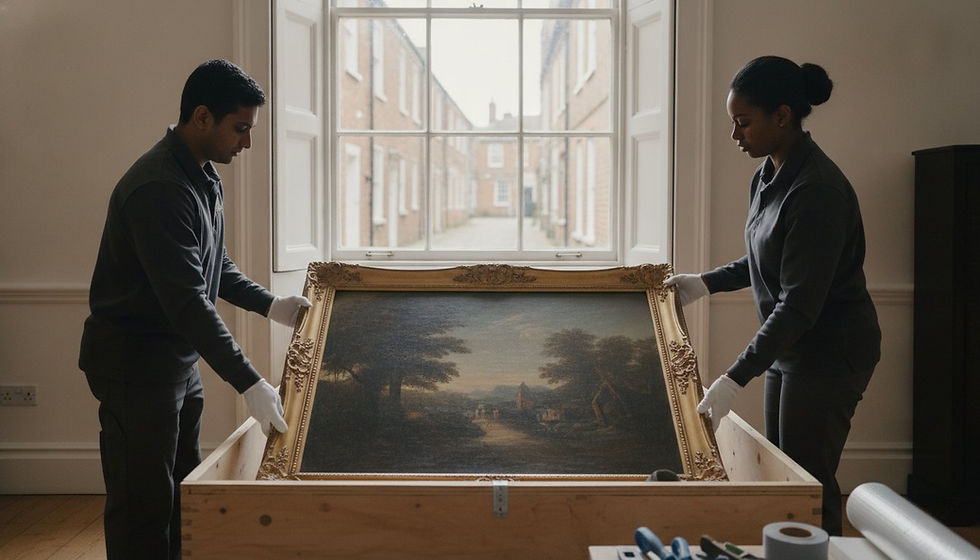
In the UK, "white-glove" service means a bespoke plan for every individual piece. This involves specialist art handlers who possess the technical knowledge to dismantle complex installations or secure fragile canvases. These technicians are often security-cleared and trained in specific packing techniques like "shadow boxing" or custom timber crating. You should always opt for fine art & antique moving specialists for:
Any individual item valued over £5,000.
Gilded frames that are prone to "flaking" during transit.
Musical instruments, such as grand pianos, which require climate-stable environments to protect the soundboard.
Sculptures with high centres of gravity or delicate extremities.
This methodical approach ensures your collection arrives in the same condition it left, providing the calm and controlled efficiency you need during a transition.
The Anatomy of a Specialist Move: A Meticulous Journey
Moving a private gallery or a single family heirloom requires more than just a sturdy box. It demands a five-stage protocol designed to eliminate guesswork and lower your blood pressure. Our process for fine art & antique moving follows a rigid, yet empathetic, sequence to ensure your collection remains pristine.
Step 1: Detailed Inventory. We create a 4K digital inventory and condition report. Every existing mark, patina detail, or structural nuance is recorded before a single sheet of acid-free paper touches the item.
Step 2: Environmental Assessment. We measure the temperature and humidity at both the origin and destination. A sudden shift from a humid London basement to a dry, centrally heated apartment can cause wood to warp or paint to crack.
Step 3: Engineering the Move. This involves selecting the specific vehicle and handling equipment. If we're moving a 200kg marble plinth, we calculate floor load-bearing weights and identify the correct hoist or ramp.
Step 4: Meticulous Execution. Your dedicated relocation consultant oversees the entire day. They act as the single point of contact, ensuring the plan is followed to the letter.
Step 5: Post-Move Inspection. Once the item is placed in its new home, we conduct a final side-by-side comparison with the initial condition report to ensure total peace of mind.
The Importance of the Initial Consultation
A physical or video survey is the foundation of a successful move. We don't just look at the art; we look at the architecture. We measure door frames and stairwell tight-turns to the nearest millimetre. For complex installations, we produce a bespoke 'Method Statement'. This document acts as a tactical blueprint, detailing exactly how we'll navigate a 17th-century tapestry through a narrow Victorian hallway without a centimetre of contact with the walls. If you have concerns about a specific piece, you can always get in touch for a chat with our specialists.
Specialist Transit: Air-Ride and Climate Control
UK road surfaces are often unforgiving. To combat this, we utilise vehicles equipped with air-ride suspension. This technology uses pressurised air bags rather than traditional steel springs, resulting in a 65% reduction in road-surface vibration. For sensitive mediums like oil on canvas or delicate wax models, climate-controlled transit is essential. We maintain a consistent environment of 19°C to 21°C to prevent thermal shock. Our team regularly consults the NPS Museum Handbook on Packing and Shipping to ensure our fine art & antique moving standards align with global museum-grade best practices. Security is equally paramount; our long-distance vehicles include GPS tracking and dual-driver protocols to ensure your collection is never left unattended.

Bespoke Protection: The Science of Packing and Custom Crating
Standard cardboard boxes are the primary enemy of fine art & antique moving. While these containers suffice for household goods, they lack the structural rigidity required to prevent a 15kg oil painting from flexing or a Regency chair from sustaining pressure on its cabriole legs. When an item is valuable or fragile, we don't just pack it; we engineer a protective environment around it. In 2023, data from transit insurance providers suggested that 85% of damage claims resulted from internal movement within a container. We eliminate this risk by ensuring every item is immobilised within its housing.
Specialised items require distinct mechanical considerations. For longcase clocks, we secure the weights and pendulums separately to prevent internal mechanism damage. For pianos, we use heavy-duty shoes and tailored skids to manage the immense tension of the strings during the shift. When we prepare these items, we often refer to the National Park Service's guide to handling and packing artifacts to ensure our methods align with international conservation standards. This meticulous approach turns a high-stress logistical challenge into a controlled, predictable process.
Packing Materials That Protect Provenance
We avoid standard bubble wrap for direct contact with sensitive surfaces. Plastic can trap moisture or react with delicate glazes, causing "ghosting" on oil paintings. Instead, we use glassine paper, which is pH-neutral and resistant to grease and water. For ceramics, we employ double-walling techniques and internal cushioning to absorb vibrations before they reach the object. Museum-grade packing is the gold standard for preservation, utilising chemically inert materials that prevent any physical or chemical degradation of the object during transit.
The Crate-Making Process
Our in-house team designs timber crates specifically for the dimensions of your piece. We calculate the "float," which involves leaving a precise gap between the item and the crate walls, filled with high-density foam to suspend the object safely. This design ensures that any external impact is absorbed by the crate rather than the artwork. We offer both lined and unlined options to manage moisture levels, which is vital for wooden antiques sensitive to UK humidity fluctuations.
For clients moving collections abroad, we ensure every wooden crate meets ISPM15 standards. This international regulation requires timber to be heat-treated to prevent the spread of pests across borders. By handling these technical details in-house, we provide a seamless transition for your collection, whether it's moving to a gallery in London or a private residence in New York. Our goal is to provide the peace of mind that comes from knowing your fine art & antique moving requirements are handled by experts who value your history as much as you do.
Managing Risk: Insurance, Security, and Peace of Mind
Your collection represents more than just financial capital; it's a curated history that requires a bespoke approach to risk management. Standard transit insurance, often included in basic removals packages, typically compensates based on weight. In the UK, this might only amount to £40 per kilogram. For a delicate porcelain figure or a lightweight canvas, such cover is practically non-existent. Professional fine art & antique moving requires "All-Risk" coverage. This specific type of policy covers your items from the moment they are handled until they are safely positioned in your new home, including accidental damage during the packing process itself.
A critical component often overlooked is the "Depreciation of Value" clause. If a 19th-century mahogany desk is damaged and subsequently restored, its market value may still drop by 20% or more due to the loss of original patina or structural integrity. An All-Risk policy with a depreciation clause ensures you're compensated for this loss in resale value, not just the cost of the repair. Additionally, presenting a professional packing certificate to your insurer can be a powerful tool. Many specialist insurers, such as Hiscox or AXA Art, may reduce your transit premiums by up to 15% when they see a certified plan from a recognised expert.
Specialist Insurance Nuances
The "Pairs and Sets" clause is vital for collectors. If one chair from a set of six George III dining chairs is irreparably damaged, the value of the remaining five drops significantly. This clause ensures the insurer pays for the loss of the entire set's value. To make this work, you'll need professional valuations dated within the last 24 months. We recommend documenting every item with high-resolution digital photos from four angles before our team arrives. This clear evidence ensures a seamless claims process, though our goal is to ensure you never need to use it.
Security and Confidentiality
High-value moves demand a "quiet" approach to prevent unwanted attention. We often utilise unmarked vehicles for sensitive fine art & antique moving projects to ensure the contents remain anonymous during transit. Security isn't just about the van; it's about the people. Goldfish Removals employs a 100% permanent workforce, avoiding the 30% risk increase associated with using temporary agency staff. Every team member undergoes rigorous vetting to maintain total confidentiality. Our meticulous Packing Services are designed to provide physical protection that matches this high level of digital and personal security.
Protecting your investment starts with a conversation about your specific needs. Get in touch for a chat with our specialist team to discuss a tailored security plan for your collection.
Ensuring a Seamless Transition for Your Most Valued Items
Moving a private gallery or a single cherished heirloom requires more than just physical strength. It demands a level of meticulous planning that turns a potentially chaotic day into a calm, managed experience. Choosing the right partner for fine art & antique moving is the final hurdle in protecting your investment and your peace of mind. A professional transition is defined by what happens before the first crate is lifted and after the last one is placed.
Vetting Your Specialist Partner
Price shouldn't be your only metric. In the UK market, a quote that sits 20% to 30% below the industry average often indicates a compromise on specialist packing materials or transit insurance limits. Always ask if your movers are members of the British Association of Removers (BAR) or have specific training in handling fragile mediums like oil on canvas or 18th-century marquetry. Requesting a case study involving a collection of similar value, perhaps exceeding £100,000, provides concrete proof of their capability. At Goldfish Removals, we assign a dedicated Relocation Consultant to every project. This single point of contact ensures you aren't repeating instructions to different departments, keeping the communication current smooth and reliable.
Your Role in the Process
While our team handles the technical lifting, your preparation helps the day flow without a hitch. Focus on the logistics of your space and the documentation of your items. A well-prepared move is a secure move. We recommend completing your inventory checks at least 48 hours before the team arrives to avoid last-minute stress.
Documentation: Keep your certificates of authenticity, recent valuations, and insurance policies in a separate, secure folder that stays with you at all times.
Access: Clear all hallways and entry points. If we're moving a grand piano or a large sculpture, ensure there's a clear 1.5-metre radius around the item for the crew to work.
Safety: Secure pets in a quiet room and ensure children are in a safe area to prevent accidental trips during the loading process.
Once we arrive at your new destination, the service continues until every piece is positioned perfectly. Our specialists don't just drop off crates; we offer bespoke unpacking and professional installation to ensure your art is displayed safely. We also remove all specialist debris, such as acid-free tissue and bespoke timber crates, leaving your new home pristine. If you want to ensure your collection receives this level of individual care, get in touch for a chat about your collection today.
Preserving Your Collection’s Legacy
Your collection represents more than just financial value; it’s a curated history that deserves meticulous care. Successful fine art & antique moving relies on three essential pillars: specialist technical knowledge, bespoke physical protection, and robust risk management. By opting for custom crating and expert handling, you ensure your most delicate items bypass the standard risks of transit.
At Goldfish Removals, we’ve spent 10 years refining our specialist handling techniques to provide this exact level of security. We don't believe in one-size-fits-all solutions. Instead, we assign a dedicated Relocation Consultant to every client to manage every detail of the journey. Our team builds bespoke in-house crating solutions in our own workshop, ensuring a precision fit for every sculpture, clock, or canvas. You can lower your moving day blood pressure by letting our experts handle the heavy lifting and the intricate planning.
We're ready to help you plan a seamless transition for your most cherished possessions.
Frequently Asked Questions
What is white-glove moving and do I need it for my antiques?
White-glove moving is a premium service where specialists handle every aspect of the relocation, from bespoke packing to final placement in your new home. You certainly need this for antiques because 95% of transit damage occurs due to improper handling by general movers. We treat your items with the utmost respect, ensuring that every delicate surface and intricate joint receives the individual care it deserves.
How do you pack a large oil painting for a long-distance move?
We protect large oil paintings by first wrapping them in acid-free glassine paper to prevent any surface sticking or chemical reactions. Then, we add a layer of moisture-resistant bubble wrap and secure the piece inside a custom-built timber crate. This meticulous method ensures the canvas remains taut and safe during a 300-mile journey across the UK, providing total security for your investment.
Do I need to get my antiques appraised before the move?
Yes, you should obtain an independent valuation dated within the last 12 months before your move begins. While we provide comprehensive transit insurance up to £50,000 per vehicle, having a professional appraisal ensures you have the correct documentation for any potential insurance claim. It gives you complete peace of mind and simplifies the process of fine art & antique moving for everyone involved.
Can you move a grandfather clock or a delicate chandelier?
We regularly move complex items like grandfather clocks and 18th-century crystal chandeliers with total precision. For a clock, we secure the weights and pendulum separately to prevent internal mechanism damage during transit. For chandeliers, we use specialised hanging crates that allow the fixture to remain suspended; this prevents the 200 or more delicate pieces from knocking together or breaking under their own weight.
What happens if an antique is damaged during the move?
If damage occurs, our dedicated claims team initiates a formal review within 24 hours of your report. We maintain Goods in Transit insurance that covers individual items up to £10,000 as standard, though we can increase this limit for higher-value collections. We also work with a network of 15 specialist restorers across the UK to ensure any issues are rectified by experts in the field.
How much does fine art and antique moving typically cost?
The cost of fine art & antique moving varies based on the item's size and value, but prices typically start from £150 for a single crated painting. A full collection move involving 10 or more delicate items usually ranges between £1,200 and £3,500. This fee covers our bespoke materials, specialist equipment, and the expert time required for the meticulous packing of your most precious belongings.
Do you provide climate-controlled storage for art collections?
We offer secure, climate-controlled storage facilities that maintain a constant temperature of 18 degrees Celsius and 50% humidity. These specific conditions are vital for preventing wood warping or paint cracking in older, sensitive pieces. Our 24-hour monitored units ensure your collection stays in pristine condition, whether you're storing it for 2 weeks or 2 years during a transition.
Is your staff trained specifically in handling fine art?
Every member of our team completes a 40-hour specialist training programme focused on the technical aspects of moving high-value items. This includes masterclasses in timber crating and the chemical properties of different packing materials. We don't use casual labour; our permanent staff have an average of 8 years' experience in the removals industry and understand the emotional value of your collection.


Comments