
Phasing an Office Move to Reduce Disruption: A Strategic Guide for Businesses


The fastest way to complete a successful office relocation is actually to slow the process down. Most business leaders fear that a move requires a total halt to operations, leading to missed deadlines and anxious clients. You're likely worried about the prospect of your IT servers going dark or your staff struggling through weeks of avoidable chaos. We understand that your business cannot simply pause because your address is changing; your commitments to your customers remain the priority. By phasing an office move to reduce disruption, you can transform a high-risk event into a series of manageable, low-impact transitions that protect your bottom line.
In this guide, we will show you how to structure your relocation in logical stages to maintain business continuity and safeguard your team’s productivity. We provide a clear roadmap for a departmental move that keeps your essential services running smoothly whilst ensuring your staff feel supported and organised. You will discover how a strategic, step-by-step approach replaces moving-day anxiety with a sense of calm, controlled efficiency.
Key Takeaways
Understand why a multi-stage relocation is the gold standard for protecting your core business functions and ensuring essential services stay online.
Learn how to use the Phasing Matrix to choose between departmental or functional strategies when phasing an office move to reduce disruption.
Discover why staging your move can be more cost-effective than a single-day relocation by eliminating the hidden expenses of total operational downtime.
Master a five-step action plan that includes essential IT "snagging" periods between each stage to stop technical issues from affecting your productivity.
Identify the value of local expertise in Surrey and Hampshire to ensure your relocation is handled with the care and precision your business deserves.
Table of Contents
What is a Phased Office Move and Why is it the Gold Standard for Continuity?
A phased office move isn't just a slower way to pack; it's a strategic decision to spread your relocation over several days or even weeks. Instead of attempting to move every desk and server in one frantic weekend, you move your business in manageable, pre-defined blocks. The primary objective is to ensure that your core business functions never go offline at the same time. This approach relies on effective office space planning, where you map out exactly how your new premises will accommodate incoming teams whilst the old site remains active and productive.
There are two main ways to approach this. Departmental phasing involves moving specific teams, such as Marketing or HR, in separate windows. Functional phasing focuses on moving non-essential equipment or storage first, followed by high-priority IT infrastructure later. Both methods offer a massive psychological boost for your team. When employees see a calm, controlled transition, their anxiety levels drop. They aren't worrying about missing cables or lost files. Instead, they can focus on their work, knowing the logistics are being handled with professional precision.
The Core Benefits of the Staged Approach
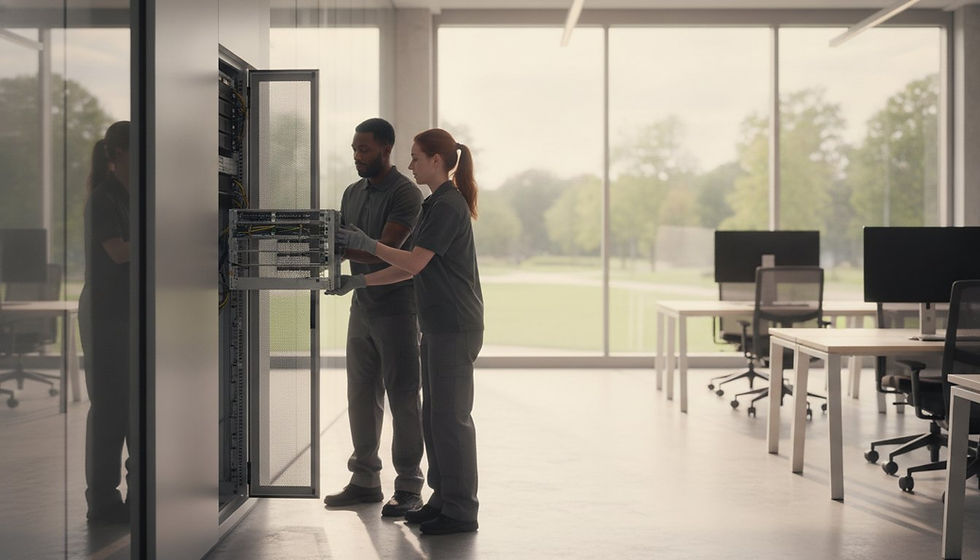
Moving in stages significantly reduces the risk of a total IT blackout. If a server issue arises at your new Farnborough or Guildford office, you still have a functional base of operations at your original site. This allows your technical teams to troubleshoot snagging issues in a live environment before the entire workforce arrives. By keeping the move orderly, you protect staff morale and ensure that individual productivity stays high throughout the transition.
When is Phasing Essential for Your Business?
For businesses with more than 50 employees or those with complex, client-facing IT systems, phasing an office move to reduce disruption becomes a necessity. A "Big Bang" move might work for a small start up, but modern hybrid businesses often require more nuance to protect their continuity. The Productivity Buffer is the specific overlap period where both the old and new office locations remain fully functional to prevent any service gaps. This strategy ensures that whilst one part of your team is in transit, the rest are available to support your customers without interruption. It's about maintaining a steady, unobstructed progression that keeps your business moving forward even as you're physically changing location.
The Phasing Matrix: Choosing the Right Strategy for Your Relocation
Selecting the right strategy for your move requires a deep understanding of your operational heartbeat. You shouldn't just guess which team moves first. Instead, you need a framework that respects your business's unique rhythm. Every successful transition begins with "Phase 0." This is the period where your digital backbone is established. Servers, high-speed internet, and telephony must be fully operational at the new premises before a single employee arrives. Without this foundation, your team will be idle, regardless of how quickly their desks were moved. Phasing an office move to reduce disruption relies on this technical readiness being the absolute priority.
Once the infrastructure is set, you must identify your "Critical Path" departments. These are the teams that directly impact your revenue or customer satisfaction. Usually, these departments are the last to leave the old office and the first to be fully functional at the new one. Before setting any dates, map out your inter-departmental dependencies. If your Finance team relies on physical documents held by HR, moving those departments a week apart could create a bottleneck. Identifying these links early allows you to maintain a steady, unobstructed progression through the entire process.
Method 1: The Departmental Split
The departmental split is often the most logical choice for larger organisations. By moving non-essential teams like Marketing or HR first, you clear the original space of unnecessary clutter. This reduces the "crowd factor" at both office centres, allowing for a more focused and calm environment for everyone involved. Keeping your Sales and Customer Support teams at the original location until the new site is fully tested ensures that your clients never experience a drop in service quality. It's a sensible way to test the water before the majority of the workforce arrives.
Method 2: The Functional Split (IT-Led)
Alternatively, the functional split is an IT-led strategy that works well for tech-heavy businesses. This involves relocating servers and core hardware over a weekend whilst your staff work remotely. It ensures the network is ready and cabling is complete before any physical desks arrive. This method minimises the risk of staff sitting around waiting for a connection. If you find yourself with non-essential furniture or archives that don't fit into the immediate schedule, using professional storage solutions can bridge the gap between phases. This keeps both your old and new spaces clear and organised during the transition.
Phased Move vs. One-Off Relocation: A Cost and Disruption Analysis
It's a common misconception that spreading a relocation over several days naturally leads to a higher final invoice. Many business owners worry that multiple call-outs for a removal team will drain their budget. In reality, phasing an office move to reduce disruption is often the most fiscally responsible choice for a growing company. To decide which path is right for you, it's helpful to calculate your Downtime Threshold. This is the total cost of your business being completely offline for a full working day, including lost revenue, missed client opportunities, and staff wages for unproductive time. When you compare this figure to the cost of a staged move, the value of continuity becomes clear.
One-off moves frequently incur hidden expenses that don't appear on the initial quote. You might face hefty overtime charges for staff staying late to unpack, or emergency IT call-out fees when a complex network fails to reboot correctly under pressure. A single, high-pressure event increases the likelihood of errors, damaged equipment, or lost files. By spreading the load, you treat the relocation as a controlled operational project rather than an emergency evacuation. This methodical rhythm provides the structure and predictability that a business in transition needs to stay profitable.
Efficiency and Resource Allocation
Smaller, more efficient removal crews can work with greater precision than a large, hurried team. By using hourly-rate commercial moving services, you gain the flexibility to scale the workforce up or down based on the specific needs of each phase. This staged approach also allows you to reuse packing materials amongst different departments, which reduces both waste and expense. At Goldfish Moving & Storage, we specialise in managing these complex, multi-date schedules across Surrey and Hampshire. Our team ensures that each step feels like a calm progression, and we can even help you coordinate office removals that fit perfectly around your peak trading hours.
Protecting Your Client Relationships
Your brand reputation is built on reliability and responsiveness. Phasing your move ensures your phone lines and support centres remain active, even whilst desks are being dismantled in another department. By maintaining this "Business as Usual" promise, you protect your client relationships and demonstrate a level of controlled efficiency that reinforces your professional standing. Clear communication is key during this time. You can inform your clients about the transition phases in advance, reassuring them that your high standards of service won't falter whilst you're upgrading your facilities.

How to Implement a Phased Office Move: A 5-Step Action Plan
Execution is the bridge between a great strategy and a successful relocation. To keep the process moving smoothly, you should appoint a dedicated Relocation Lead for each specific phase. This person acts as the primary point of contact for that department, ensuring that every box is accounted for and every staff member knows their role. Between each stage of the move, you must schedule a mandatory IT snagging period. This 24-hour window allows your technical team to resolve minor connectivity issues before the next group of employees arrives. Phasing an office move to reduce disruption requires this rhythmic approach, where each step is validated before the next begins.
You might also consider a "Ghost Office" setup. This involves maintaining a small skeleton crew at your original location whilst the majority of the team transitions. This crew ensures that physical mail is collected and any legacy systems remain monitored until the very last moment. To keep the physical logistics organised, use a clear colour-coding system for your packing labels. Assign a specific colour to each phase so that our removal teams can instantly identify which items belong in the first wave and which are destined for later stages of the move.
Step 1: The Operational Audit
Begin by conducting a thorough inventory of your assets. Categorise every item into Phase 1, 2, or 3 based on how often your team uses them. You should identify the "Must-Haves" that need to stay until the final day, such as your core server and, perhaps most importantly, the office coffee machine. It's a good idea to consult with Goldfish during this audit. We can help you align your inventory with our vehicle capacities, ensuring that each phase of the move is as efficient as possible.
Step 2: IT and Connectivity Validation
Connectivity is the lifeblood of your business. You must ensure the new office centre has active Wi-Fi and power before the first desk even enters the building. We recommend moving a small test team of three to five people into the new space 48 hours before the main phase begins to verify all systems. This early validation prevents widespread frustration and allows you to use professional IT equipment relocation services for your most sensitive hardware with total confidence.
Step 3: Internal Communication and Staff Briefings
Staff anxiety often stems from a lack of information. You can lower stress levels by providing individual Move Packs that include specific dates, new seating plans, and local area guides. Be honest about which services will be available in each location during the transition weeks. If your team has concerns about commuting to different sites whilst the move is in progress, address these early to ensure everyone feels supported. If you need expert help with the logistics of your transition, our team is ready to provide a professional office removals service tailored to your specific timeline.
Partnering for a Seamless Office Relocation in Surrey and Hampshire
Relocating a business in the South East requires more than just a fleet of vans; it needs a partner who understands the local commercial landscape. As a family-run business, we've spent years helping companies navigate the busy hubs of Farnborough and Aldershot. We know that every organisation has a unique heartbeat, which is why we don't believe in a one-size-fits-all approach. By offering the flexibility of hourly-rate services, we allow you to build a tailored phasing schedule that respects your operational needs. If your new premises aren't quite ready for your full archive or surplus furniture, our secure storage solutions provide a safe harbour for your assets until you're ready for the final wave of the transition.
Our role is to provide a reassuring, professional presence that lowers your stress levels from the first consultation to the final desk installation. We replace the typical anxiety of a move with a sense of calm, controlled efficiency. Phasing an office move to reduce disruption is a complex puzzle, but with the right support, it becomes a steady, unobstructed progression. We take the time to explain the rationale behind our methods, building a layer of transparency and trust before the physical work even begins. This methodical rhythm is exactly what a business in transition needs to feel supported and organised.
Expert Handling of Commercial Assets
We treat your commercial assets with the same reverence as a family heirloom. Whether we're dismantling modular workstations or relocating sensitive IT hardware, our focus remains on protection and reliability. Professional packing and comprehensive insurance aren't just checkboxes for us; they're the foundation of the quality we provide. In a corporate context, the "delicate handling of precious items" refers to your data, your infrastructure, and your team's time. We ensure these vital components are moved with sophisticated precision, using active verbs and direct action to keep your project on track.
Your Local Moving Partner
From the corporate centres of Guildford and Fleet to the bustling offices of Weybridge, we serve the entire Surrey and Hampshire border with a sense of traditional service values. Our decade of experience makes us the ideal authoritative expert for your move, as we've seen every possible industry challenge and have a plan for all of them. We pride ourselves on being approachable helpers who are both highly organised and genuinely kind. If you're ready to protect your productivity and ensure business continuity, speak to our commercial team today to plan your phased office move and discover how we make complex relocations feel effortless.
Secure Your Business Continuity with a Structured Move
A successful relocation isn't measured by how fast the vans are loaded, but by how quickly your team returns to full productivity. By choosing a staged approach, you ensure your essential services remain online whilst your staff transition to their new environment with confidence. Phasing an office move to reduce disruption transforms a potentially chaotic event into a series of calm, predictable milestones that safeguard your brand reputation. You've worked hard to build your business; your move should be a celebration of growth, not a source of operational strain.
With over a decade of experience managing relocations across Surrey and Hampshire, we provide the expert packing and flexible hourly-rate services needed for complex commercial projects. We also offer secure storage solutions for any items that don't fit into your immediate plans. If you're ready to plan a transition that respects your operational heartbeat, we invite you to request a tailored office relocation quote from Goldfish Moving & Storage. Our team is here to handle the heavy lifting so you can stay focused on your clients. We look forward to helping you start this new chapter with total peace of mind.
Frequently Asked Questions
Is phasing an office move more expensive than a one-off weekend move?
Phasing is often more cost-effective because it prevents a total halt to your operations. Whilst the transport costs might appear higher on paper, you avoid the massive loss of revenue associated with a complete business shutdown. By spreading the load, you also reduce the need for expensive emergency IT support or staff overtime that often occurs during a rushed, single-day relocation.
How long does a phased office move typically take to complete?
The duration depends on your company size, but most transitions take between three days and three weeks. A smaller firm might move over two consecutive weekends, whilst a larger corporation might relocate one department every five days. We always recommend building in a 24-hour buffer between phases to allow for technical snagging and to ensure each team is fully operational before the next group arrives.
Which department should I move first during a phased relocation?
Non-essential departments that don't have direct client contact are usually the best candidates for the first wave. Teams like HR, Marketing, or your physical archives can settle in first, allowing you to test the new building's facilities in a live environment. This strategy ensures your Sales and Support staff stay in a stable, familiar environment until the new site is proven to be fully functional.
How do I handle IT and server downtime during a staged office move?
Handling IT requires a "Phase 0" approach where your digital infrastructure is live before any staff arrive. You should relocate your core servers during a low-traffic window, such as a Friday evening, whilst your team works remotely or from the old site. Phasing an office move to reduce disruption relies on this technical overlap to prevent any gaps in your digital service or client communications.
What is the best way to communicate a phased move to my staff?
Transparency is the most effective tool for lowering staff anxiety during a transition. Provide every employee with a personalised move pack that details their specific relocation date, new seating plan, and local amenities. Regular briefings help manage expectations and allow you to address concerns about new commuting routes or temporary desk sharing before they become points of stress for your team.
Can we still work in the old office whilst the move is being phased?
Yes, your business remains operational at the original site throughout the entire process. A skeleton crew usually stays behind to handle physical mail and legacy systems until the final phase is complete. This "Ghost Office" setup ensures that your customers never experience a "closed for moving" message and that your team maintains their usual high standards of responsiveness.
How do I manage the logistics of two office locations at once?
Managing two sites requires a dedicated Relocation Lead at each location to coordinate with our removal teams. You'll need to ensure that internal communications and phone diverts are active so that staff at both centres can collaborate seamlessly. This dual-site period is a temporary but necessary step to maintain a steady, unobstructed progression towards your new headquarters.
What happens if the new office isn’t fully ready for the first phase?
If your new premises aren't fully prepared, you should utilise secure storage solutions to hold your furniture and equipment safely. This prevents your old office from becoming cluttered and keeps your relocation schedule on track. We can hold your assets in a protected environment until the building work is complete, ensuring your phased transition stays organised and your items remain protected.


Comments