
Moving Delicate IT Equipment: The Ultimate Relocation Checklist


Imagine the heavy silence of an office on a Monday morning, not because the desks are empty, but because your primary server refuses to wake up after its journey to a new premises. It's a scenario that keeps many IT managers awake at night, as the fear of hardware failure and permanent data loss is a heavy burden to carry. You've likely spent weeks worrying about cable tangles and the potential for business downtime. We know that moving delicate IT equipment is about much more than just logistics; it's about safeguarding the very heartbeat of your organisation.
We're here to replace that anxiety with a sense of calm, controlled efficiency. This article provides a comprehensive, step-by-step checklist designed to ensure your servers, workstations, and sensitive electronics arrive in perfect working order. You'll learn how to implement a professional "Audit-Secure-Verify" framework, from using specialised double-walled corrugated boxes that meet industry drop-test standards to mastering the art of cable management. By the end of this guide, you'll have the peace of mind that comes with a plan for every challenge, ensuring a quick reconnection and zero hardware damage at your new site.
Key Takeaways
Learn how to secure your digital assets through rigorous hardware audits and verified backup protocols before a single cable is disconnected.
Discover why specialist materials, such as anti-static bubble wrap and double-walled corrugated boxes, are essential for protecting sensitive components from electrostatic discharge and physical impact.
Master professional packing techniques, including the "Sandwich Method" for monitors and the correct way to prepare printers to prevent internal toner spills.
Understand the environmental factors involved in moving delicate IT equipment, such as managing condensation risks and ensuring your transit vehicle utilises air-ride suspension.
Gain a clear roadmap for achieving a relocation that minimises business downtime and ensures your hardware is ready for immediate reconnection at your new site.
Table of Contents
Phase 1: Pre-Move Preparation and Digital Safeguards
Before you even touch a screwdriver, you need a plan that covers both the tangible and the virtual. Success isn't just about the physical transit; it's about ensuring your digital environment remains intact. Moving delicate IT equipment requires a synchronised approach where physical protection and digital integrity go hand in hand. You should start by conducting a comprehensive hardware audit. This isn't just a simple inventory. It's a detailed record of serial numbers, specifications, and the current health of every machine. You'll also want to create a "Critical Path" list. This identifies the essential servers and workstations that must be operational the moment you arrive at the new site to prevent costly business downtime. Having this roadmap in place replaces moving-day panic with a sense of calm, controlled progression.
The Digital Safety Net
Backups are your ultimate insurance policy, but they're only useful if they actually work. You must test the integrity of all cloud and physical backups at least 48 hours before the move. This gives you a small window to rectify any errors before the hardware is disconnected. Whilst you're at it, organise your software licences and document IP address transitions. If you're handling sensitive data on portable storage, ensure these devices are encrypted and transported separately to maintain security. This level of detail mirrors the rigorous standards found in data center management, where every variable is accounted for to ensure continuous uptime. It's about building a safety net that catches you before any potential glitch can turn into a crisis.
The Physical Audit Checklist
The physical side of the audit is just as vital for a smooth transition. Take high-resolution photographs of existing cable configurations from multiple angles. It's much easier to refer to a photo than to guess which port a specific Ethernet cable belongs to during the high-pressure reassembly phase. Use colour-coded tags to label cables and their corresponding ports; this simple step saves hours of frustration later. This is also the perfect time to identify "End of Life" equipment. If a workstation is five years old and struggling, it's likely not worth the cost or effort of moving. Finally, note any existing "quirks" or minor damage. Documenting these details ensures your insurance coverage is accurate and provides a clear baseline for the condition of your assets post-move. By being proactive now, you protect your investment and your peace of mind.
Phase 2: Specialist Packing Materials for Sensitive IT
Having a solid plan is the first step, but the physical protection of your assets requires a higher grade of equipment than your average office move. When moving delicate IT equipment, you can't rely on standard cardboard and clear tape. You need materials engineered to mitigate the specific risks of vibration, impact, and electrostatic discharge. We understand that seeing a server rack being wheeled out can feel like watching your company's nervous system being exposed. That's why we prioritise high-grade, technical packaging that provides a fortress of protection for your most valuable hardware.
Anti-Static Protection Explained
Electrostatic discharge (ESD) is the sudden flow of electricity between two electrically charged objects, which can cause invisible but terminal damage to sensitive internal circuitry. Most people instinctively reach for standard clear bubble wrap, but this material actually generates static through friction. You must use the pink anti-static variety instead. It's treated with a specific chemical coating that prevents the buildup of static charges during transit. Avoid using "packing peanuts" or loose-fill polystyrene; these are notorious for creating static and often allow heavy items to shift. A reputable university moving guide will often highlight these precautions as non-negotiable for research-grade technology and departmental servers.
Crates vs. Boxes for Business IT
For smaller peripherals like keyboards, mice, and webcams, lidded plastic crates offer superior crush resistance and easy stacking. However, for the heavy lifters like server units and workstations, we recommend double-walled corrugated boxes with a minimum 32 ECT (Edge Crush Test) rating. These provide the structural integrity needed to prevent the bottom from sagging under significant weight. If you're transporting high-value servers or sensitive audio-visual gear, foam-lined flight cases are the gold standard for shock absorption. For monitors, avoid acidic papers that might etch or cloud delicate screen coatings over time. Instead, use non-acidic packing paper or specialised screen protectors to keep displays pristine.
If you've kept the original boxes and moulded foam inserts, now is the time to retrieve them from storage. They provide a bespoke fit that third-party materials struggle to replicate. If those boxes are long gone, don't worry. We can provide a range of professional packing materials specifically designed for high-end electronics. Using the right tools doesn't just protect the hardware; it protects your timeline by ensuring everything works perfectly the moment it's plugged in at your new premises. This level of care replaces typical industry-related anxiety with a sense of calm and controlled efficiency.
Phase 3: The Packing Masterclass for Monitors and Servers
When you're moving delicate IT equipment, the physical packing phase is where theoretical plans meet practical reality. It's the moment when the vulnerability of your hardware feels most acute. We've found that a methodical approach to each specific device type doesn't just prevent damage; it significantly reduces the time it takes to get your team back online. This methodical approach to moving delicate IT equipment ensures that your organisation's most sensitive assets are protected from the moment they leave the desk. The goal is to eliminate any chance of movement or pressure that could lead to a "silent" failure upon arrival.
For monitors, we always recommend the "Sandwich Method". Place a sheet of non-acidic paper over the screen, then secure two pieces of stiff, double-walled cardboard on either side before wrapping the entire unit in anti-static bubble wrap. This creates a rigid protective shell that deflects external pressure. It's vital to pack these units upright, as laying them flat makes the glass susceptible to pressure-point cracks from items stacked above. Never place adhesive tape directly onto a screen surface, as the residue can permanently damage the anti-glare coating. If you're managing a larger infrastructure, consulting a professional Data Center Relocation Checklist can provide further granular detail on coordinating these moving parts during a complex transition.
Printers and custom PCs require their own specific care. Always remove toner cartridges and ink bottles before transit to prevent internal spills that can ruin a machine beyond repair. For custom-built workstations with heavy graphics cards or large heatsinks, consider using internal expanding foam bags or even removing the components entirely to prevent vibration from snapping the motherboard mounts. Bundling your cables with Velcro ties rather than adhesive tape keeps your equipment clean and makes the reassembly process at the new site much faster. This small detail prevents the "sticky residue" problem that often plagues office moves.
Protecting Screen Integrity
Screens are amongst the most fragile items in any office move. Beyond the sandwich method, you must decide whether to remove the stands. Whilst it takes more time, removing the base allows the monitor to sit flush in its box, reducing the leverage that can snap a plastic mount during a sudden stop. If you keep the stand attached, ensure it's heavily padded to prevent it from punching through the box. Always mark these boxes as "Fragile" and "This Side Up" in bold, clear lettering to guide the handling team with absolute precision.
Server and Rack Management
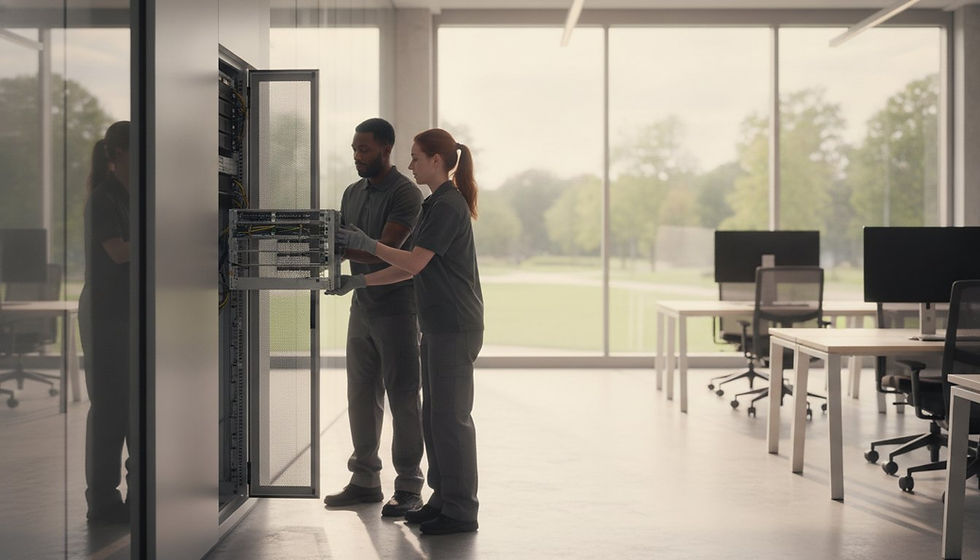
Deciding whether to move a server rack whole or strip it depends on the distance and the rack's structural integrity. For local moves, you might keep the rack populated if it's rated for transit, but for most relocations, stripping the components is the safer choice. This allows you to distribute the weight across multiple specialised crates rather than creating a single, top-heavy hazard. Secure all mounting rails and small hardware in labelled, transparent bags taped to the side of the corresponding server unit so nothing goes missing in the transition. This level of organisation ensures that "Day One" at your new office is productive rather than chaotic.

Phase 4: Logistics, Environment, and Local Transit
Once your equipment is safely encased in anti-static layers, the focus shifts to the journey itself. Moving delicate IT equipment is as much about managing the environment as it is about physical padding. The transition from a temperature-controlled office to a removal van, and back again, introduces variables that can compromise sensitive circuitry if not handled with professional foresight. We approach this phase with a focus on stability and climate control, ensuring the "digital heartbeat" of your business remains steady throughout the transition.
Climate and Condensation Control
The Surrey and Hampshire climate can be notoriously damp, and humidity is a silent enemy of high-end electronics. When cold hardware enters a warm building, or vice versa, condensation can form inside server casings. To prevent short circuits, you must follow the four-hour acclimatisation rule. This means leaving all equipment powered off for at least four hours after arrival to allow it to reach ambient room temperature. We recommend placing large silica gel packets inside your IT crates to absorb any lingering moisture during the trip. This is especially vital when loading during the unpredictable Hampshire rain; even a few rogue droplets can cause significant issues if they find their way into a cooling fan or port.
Safe Loading and Securing
The physical journey requires more than just a standard van. We utilise vehicles equipped with air-ride suspension, which acts as a sophisticated shock absorber against road vibrations and potholes. This technology is essential for protecting the delicate solder joints and mechanical drive arms inside your servers. To maintain total control, we follow a strict "No-Stack" rule for IT boxes; nothing is ever placed on top of a monitor or server unit. We also ensure your hardware is the last items loaded onto the van and the first items off. This minimises the time the equipment spends in transit and allows your IT team to begin the reconnection process immediately.
Route planning is another layer of our protection strategy. Whether we are navigating the busy centres of Guildford or the backroads of Farnborough, we select paths that offer the smoothest surface and fewest sudden stops. During the journey, we use soft-cloth load-straps to prevent any lateral movement within the vehicle, ensuring your racks and towers remain perfectly upright. If the thought of managing these logistical hurdles feels overwhelming, our specialist office removals team can take the weight off your shoulders with a tailored transit plan. By treating every server like a priceless heirloom, we replace typical relocation stress with a sense of calm, controlled efficiency.
Phase 5: Professional IT Relocation with Goldfish
You've mapped out your backups and sourced your anti-static wrap, but the final hurdle is the physical execution. Moving delicate IT equipment is a high-stakes operation where even minor errors lead to significant disruptions. At Goldfish Moving & Storage, we specialise in identifying and managing the specific stress-points of a technical relocation. We understand that your servers and workstations aren't just hardware; they are the foundation of your daily operations. Our team approaches every project with a sense of calm and controlled efficiency, replacing the usual moving-day anxiety with a structured, professional plan.
Whether you are moving across Aldershot, relocating to a new tech hub in Farnborough, or expanding within the wider Surrey area, our local expertise ensures a smooth transition. We know the regional geography and the logistical challenges of our local business parks. To help you plan with confidence, we provide fixed-fee quotes for our office removals. This transparency ensures there are no hidden surprises on your final invoice, allowing you to manage your relocation budget with absolute precision. Our goal is to provide a high-end, boutique service that remains grounded and accessible to businesses of all sizes.
Why a Professional Move Saves Money
The temptation to handle an IT move in-house is often driven by a desire to save on costs, but the hidden expenses of DIY damage can be staggering. A single dropped server or a static-damaged motherboard can lead to extended downtime that far outweighs the price of professional assistance. We provide comprehensive insurance coverage that offers total peace of mind, protecting your assets from the moment we begin our packing services until the final workstation is reconnected. Our person-centred approach means we treat your equipment with the same care we would give to a priceless heirloom, ensuring a steady and unobstructed progression through the entire process.
Book Your IT Relocation Survey
Every successful move begins with a detailed understanding of the challenge at hand. When you book a site visit with us, one of our seasoned professionals will visit your Surrey premises to conduct a thorough assessment. We don't just count boxes; we look at access points, sensitive hardware requirements, and your specific timeline. This allows us to tailor our packing materials and transit methods to your exact inventory, from custom-built PCs to complex server arrays. We invite you to engage in a personal dialogue with us to discuss your needs. Contact us today for a bespoke IT moving quote and let us help you transition to your new workspace without a single glitch.
Ensuring a Seamless Transition for Your Business
Navigating a commercial relocation doesn't have to be a source of constant worry. By following a structured framework of auditing your assets, using anti-static materials, and respecting the environmental needs of your hardware, you ensure a seamless transition. Moving delicate IT equipment is a specialised task that requires precision; however, with the right preparation, your systems will be ready to perform the moment they are reconnected at your new premises.
With over a decade of experience across Surrey and Hampshire, Goldfish Moving & Storage is here to handle the heavy lifting for you. Our professional packing services for delicate assets and transparent, fixed-fee quotes provide the reliability your business deserves. We treat your servers and workstations with the same individual care we would give to a family heirloom, ensuring every component arrives in perfect working order. Ready to start your next chapter with confidence? Request an Expert Office Removal Quote and let our team manage the technical details whilst you focus on your business. We look forward to helping you achieve a successful, stress-free move.
Frequently Asked Questions
Do I need to remove the batteries from my UPS before moving?
You should disconnect and, if possible, remove the internal batteries from your Uninterruptible Power Supply (UPS) before transit. These units are incredibly heavy, and the lead-acid batteries can shift, potentially causing internal damage or accidental short circuits. Removing them makes the unit much safer for our team to handle and prevents the risk of the device powering up unexpectedly during the journey.
How long should I wait before turning on my computer after a move?
You must wait at least four hours before powering on any hardware at your new premises. This essential window allows the internal components to reach ambient room temperature and ensures any condensation formed during transit has completely evaporated. Rushing this process can lead to terminal short circuits, so it's best to let the equipment acclimatise properly before reconnection.
Is standard bubble wrap safe for my server components?
Standard clear bubble wrap isn't safe for sensitive server components because it generates static electricity through friction. When moving delicate IT equipment, you should only use pink anti-static bubble wrap. This specialised material is treated to prevent the build up of electrostatic discharge, which can silently fry motherboards and processors without showing any outward signs of physical damage.
Can I move my printer with the ink or toner still inside?
You should always remove ink and toner cartridges before moving your printer to prevent catastrophic internal spills. Even a small amount of leaked toner can coat internal sensors and rollers, often making the machine beyond economical repair. Seal the removed cartridges in airtight bags and transport them upright in a separate, clearly labelled box to keep your equipment and other assets clean.
How do I ensure my cables don’t get tangled during the move?
The best way to prevent cable tangles is to bundle each set with Velcro ties and use colour-coded labels that match the corresponding ports. Avoid using adhesive tape, as the sticky residue is difficult to remove and attracts dust. Taking high-resolution photos of the setup before you disconnect anything provides an invaluable visual guide that makes the reassembly process at your new site much faster.
What is the best way to move a large curved monitor?
Large curved monitors are best transported in their original manufacturer’s packaging, which is specifically designed to support the screen's unique arc. If you no longer have the box, we use extra-thick layers of foam padding and custom-built crates to ensure no pressure is applied to the centre of the glass. Always keep these units upright and ensure they are never stacked under other heavy items.
Does Goldfish Moving & Storage provide specialised IT packing materials?
Yes, Goldfish Moving & Storage provides a full range of specialised packing materials, including anti-static wrap, double-walled monitor boxes, and lidded IT crates. We can supply these directly to your office or handle the entire packing process through our professional moving delicate IT equipment service. This ensures your hardware is protected by industry-standard materials that are specifically chosen for high-value electronics.
Should I backup my data to the cloud or a physical drive before moving?
You should ideally use a combination of both cloud and physical drive backups, following the industry-standard 3-2-1 rule. Having your data in two different physical locations plus an off-site cloud version ensures you're protected against every eventuality during the transition. Verify the integrity of these backups 48 hours before the move so you have time to resolve any last-minute synchronisation errors before disconnecting.


Comments