
How to Plan an Office Move: The Ultimate 2026 Business Relocation Guide
- Goldfish Moving & Storage

- May 22
- 13 min read

With professional relocation costs averaging between £5 and £8 per square foot in 2026, a single weekend of mismanagement can quickly spiral into a costly logistical nightmare. You're likely feeling the pressure of balancing a full workload while trying to figure out how to plan an office move that won't disrupt your team or damage your critical IT infrastructure. It's a heavy burden. Shifting your headquarters should feel like an exciting fresh start, not a source of constant anxiety.
We understand that your business assets are more than just furniture; they're the engines of your success. This guide provides a professional framework designed to protect your equipment and ensure your employees feel supported throughout the transition. We'll explore everything from managing the updated 2026 OSHA safety standards to budgeting for the "hub-and-spoke" office models that are currently reshaping the corporate world. You'll gain a bespoke roadmap for a seamless move with zero downtime and total peace of mind.
Key Takeaways
Define your strategic goals early to create a robust Business Continuity Plan that protects your client relationships during the transition.
Assemble a "Command Centre" team with a dedicated Project Lead to manage financial decisions and departmental Move Champions for smooth internal coordination.
Protect your technical infrastructure by conducting a meticulous hardware audit and planning your server migration months in advance.
Master how to plan an office move using our 6-month timeline, ensuring every detail from lease finalization to stakeholder notifications is handled with care.
Ensure peace of mind by partnering with a BAR-accredited removal expert who prioritizes meticulous packing and provides comprehensive transit insurance.
Table of Contents
Setting the Strategic Foundation for Your 2026 Office Relocation
Success begins long before the first crate is packed. When you start considering how to plan an office move, it's easy to get lost in the logistics of bubble wrap and floor plans. However, a successful relocation starts with a clear strategic "why." Whether you're chasing growth, reducing overheads, or adapting to a permanent hybrid model, your move is a tool for business evolution. Defining these objectives early ensures that every decision, from the choice of neighbourhood to the layout of the breakroom, aligns with your long-term vision.
A vital component of this foundation is your Business Continuity Plan. Your clients shouldn't feel the ripples of your transition. We recommend identifying critical service periods and ensuring your digital operations remain uninterrupted. By safeguarding your workflows, you maintain the professional reputation you've worked so hard to build. This proactive approach turns a potentially chaotic period into a demonstration of your company's resilience and efficiency.
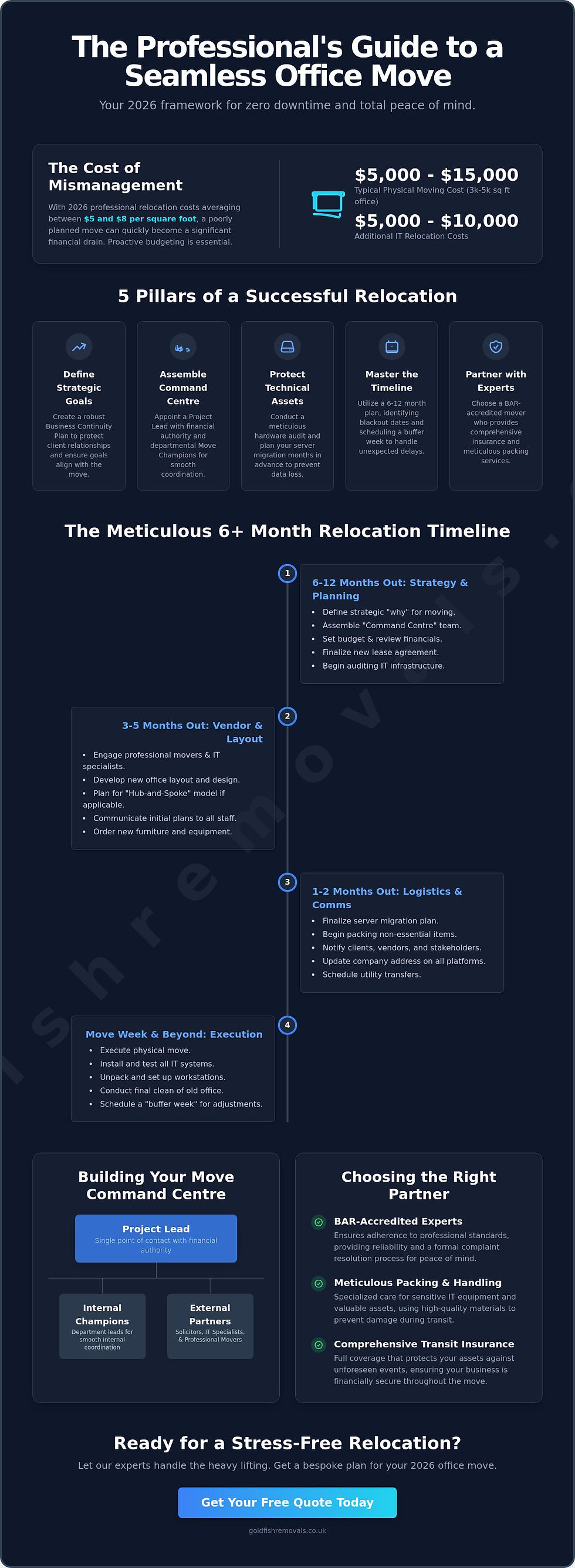
Financial clarity is equally crucial for 2026 budgets. Verified data indicates that professional office movers currently charge between £5 and £8 per square foot, though some general estimates suggest a range of £1.50 to £2.00 for basic transit. For a medium-sized office of 3,000 to 5,000 square feet, you should anticipate physical moving costs between £5,000 and £15,000, with an additional £5,000 to £10,000 for IT relocation. Engaging professional relocation services early helps you identify these hidden costs, including lease termination fees and the insurance obligations required to protect your high-value assets.
The 2026 Hybrid Work Impact
The "Hub-and-Spoke" model is a dominant trend in 2026. Many businesses are swapping large central headquarters for smaller, strategically located hubs closer to where talent lives. This shift requires a meticulous assessment of your square footage. You'll need to plan for hot-desking logistics and invest in high-spec video conferencing infrastructure to keep your remote and in-office teams connected seamlessly. Designing for flexibility now prevents the need for another move in the near future.
Defining Your Relocation Timeline
Understanding how to plan an office move involves building a timeline that respects your team's rhythm. A stress-free transition typically requires a 6 to 12-month lead time. This window allows you to identify "blackout dates"—peak business periods where operations must remain untouched. We always advise scheduling a "buffer week" before your final lease expiry. This small window of time provides immense peace of mind, allowing for final cleaning and unexpected minor adjustments without the threat of financial penalties.
Building Your Move Command Centre: Assembling the Team
Relocating an entire organization is far more than a logistical puzzle; it's a significant leadership challenge. To succeed, you must move beyond thinking about boxes and start thinking about people. The first step in learning how to plan an office move effectively is appointing a dedicated Project Lead. This individual needs more than just organizational skills. They require the clear authority to make financial decisions and sign off on contracts without waiting for a board meeting. By empowering a single point of contact, you eliminate the decision-making bottlenecks that frequently lead to expensive delays and missed deadlines.
Your internal team shouldn't work in a vacuum. A successful "Command Centre" relies on a network of trusted external partners who bring specialized expertise to the table. This includes solicitors to handle the complexities of lease transfers, IT specialists to manage the delicate migration of your data, and professional removal experts who understand the nuances of commercial transit. If you're feeling overwhelmed by the scale of the task, you can always get in touch for a chat with Goldfish Moving & Storage to help simplify your logistical planning. These experts act as an extension of your staff, providing the "heavy lifting" so your employees can stay focused on their primary roles.
Communication is the fuel that keeps your relocation moving. Anxiety thrives in a vacuum of information. Establish a regular communication cadence early, whether through a weekly email update or a dedicated channel on your internal messaging platform. This transparency keeps staff informed and calm, replacing the typical "moving day" dread with a sense of controlled progress. When employees understand the "why" and the "when" of the move, they're far more likely to support the transition rather than resist it.
The Role of Move Champions
Move Champions are your secret weapon for managing the human element of change. By selecting one influential person from every department, you ensure every team's unique needs are heard. These champions audit specialized equipment, gather feedback on seating plans, and act as a first line of support for their colleagues. This peer-to-peer approach is one of the most effective ways to understand how to plan an office move that actually improves workplace culture. It also allows you to create a bespoke FAQ document that addresses specific departmental concerns before they become major issues.
Budgeting for the Unforeseen
Financial surprises are the enemy of a smooth transition. While your primary quotes will cover transport and labour, you must allocate a 10,15% contingency fund for "snagging" issues in the new space. This fund handles everything from unexpected electrical requirements to minor repairs needed during the "handover" phase. Don't forget to account for IT decommissioning fees, which are often billed separately from physical moving costs. Investing in professional packing services rather than relying on internal labour is another strategic choice that often pays for itself by preventing damage to expensive assets.
Managing Technical Infrastructure and Sensitive Assets
Your IT infrastructure is the nervous system of your company. If it fails, your business stops. When you're determining how to plan an office move, technical downtime is often the primary source of anxiety for leadership teams. Recent data from CapRelo suggests that 46% of global organizations expect to increase their use of technology in relocation management. This highlights the growing complexity of modern office setups. Managing this complexity requires a meticulous audit of every server, workstation, and software license before the first cable is even unplugged.
One of the most critical decisions involves your server migration. You must choose between a physical transport of your hardware or using the move as a catalyst for a cloud transition. If you opt for physical relocation, your equipment requires anti-static packaging and climate-controlled transit to prevent internal damage. Beyond the hardware, your data security is paramount. We recommend performing a full system backup 48 hours before the physical move. This provides a safety net, ensuring your intellectual property remains secure even during the physical transition of your assets.
Connectivity is another "Day 1" essential that requires early coordination. Internet Service Providers (ISPs) often have lead times of several months for new fibre installations. Contact your provider as soon as the lease is signed to ensure your new space is "live" the moment your team arrives. This proactive approach eliminates the risk of a non-functional office and protects your business from the hidden costs of lost productivity. Professional IT relocation often adds between $5,000 and $10,000 to a medium-sized move budget, but this investment is vital for safeguarding your digital operations.
The IT Migration Checklist
To ensure a rapid reassembly, your team should label every cable, port, and peripheral with a color-coded system. This level of detail allows your IT staff to reconstruct workstations in minutes rather than hours. We also suggest scheduling "First-Fix" audits at the new location. These audits verify that power points and data ports are correctly positioned according to your new floor plan before the furniture arrives. This methodical rhythm prevents the "cable spaghetti" that often plagues poorly planned relocations.
Specialist Handling for Valuable Assets
Corporate environments often house items that require more than standard packing. Whether it's a heirloom piano in the lobby, fine art in the boardroom, or bespoke executive furniture, these pieces need specialist handling protocols. While basic "man and van" services might seem cost-effective for small items, they lack the equipment and expertise required for high-value corporate asset protection. We prioritize the use of bespoke crating and comprehensive transit insurance. This ensures that your most valuable possessions are handled with the same level of care as a delicate goldfish in transit, providing you with total peace of mind.
The Meticulous 6-Month Office Move Checklist
A successful relocation isn't a sprint; it's a carefully choreographed marathon. When you're looking at how to plan an office move, breaking the process into manageable stages is the only way to maintain your sanity and protect your bottom line. Six months before your move date, your focus should be on securing your foundations. This means finalizing your new lease and, crucially, appointing your removal partner. Booking early ensures you secure the best team for your specific dates, especially during peak moving seasons in the UK market.
Three months before the transition, the focus shifts toward a detailed audit. Every piece of furniture, stationery item, and piece of equipment needs a "stay or go" decision. This is the perfect time to order new supplies and start notifying your stakeholders. Your clients, suppliers, and service providers need to know your plans well in advance to prevent any disruption to your supply chain or invoicing cycles. It's about ensuring a smooth current for your business operations.
Stakeholder and Utility Notifications
Your legal and financial footprint must move with you. You'll need to update Companies House, your banks, and HMRC to ensure you remain compliant with UK regulations. Missing a single notification can lead to lost mail or, worse, legal complications. We recommend setting up mail redirection with the Royal Mail at least six weeks before the move. Don't forget to notify your clients personally; a warm, professional update builds trust and ensures they feel valued during your transition.
Packing and Crate Management
One month before the move, the physical reality of the transition begins. We strongly advocate for a "Crate Hire" system rather than traditional cardboard boxes. Plastic crates are sturdy, stackable, and far better at protecting sensitive files and equipment from being crushed. A color-coded labling system for different departments and floor levels is essential. It allows our team to place every item exactly where it needs to be in the new space. We also suggest implementing a "personal effects" policy, asking employees to take home sentimental items themselves to ensure their most precious belongings stay safe.
The final 48 hours are about clarity and closure. Implement a "Clean Desk" policy where every surface is cleared and all remaining items are safely crated. A final walkthrough with your Project Lead ensures nothing is left behind and the old space is ready for handover. If you're ready to start your journey with a partner who understands every detail, book your office removal survey today to receive a bespoke plan tailored to your business.
Choosing the Right Partner for a Seamless Transition
Selecting your relocation partner is the final and most significant step in learning how to plan an office move. While real estate agents find the physical space, a professional removal company ensures your business actually arrives there intact. It's an investment in your company's immediate future and operational continuity. A cut-price quote from an unverified operator might look attractive on a spreadsheet, but it rarely accounts for the expertise required to safeguard high-value IT infrastructure or sensitive corporate data. Choosing a partner is about more than just moving boxes; it's about finding a guardian for your business assets.
Always verify credentials before signing a contract. Look for membership in the British Association of Removers (BAR). This accreditation ensures the company adheres to strict professional standards and maintains the necessary transit insurance to protect your property. At Goldfish Moving & Storage, we act as the "Reliable Expert." We've encountered every possible moving challenge and created a framework to resolve them before they impact your schedule. This proactive approach allows you to focus on your leadership duties while we manage the complex logistics of the transition.
What to Look for in a Removal Quote
A professional commercial quote must be transparent and comprehensive. We recommend favouring fixed-fee contracts over vague hourly rates, as these provide much-needed budget certainty in the 2026 market. Your quote should explicitly include:
High-quality packing materials and specialist plastic crate hire.
Detailed provisions for IT decommissioning and recommissioning.
Secure storage solutions for surplus furniture, which is especially useful if you're transitioning to a hybrid "hub-and-spoke" model.
This level of detail eliminates hidden costs and provides a clear roadmap for your expenditure. It's the most effective way to understand how to plan an office move without facing financial surprises during the final handover.
The Goldfish Advantage: Peace of Mind
We treat your office equipment with the same meticulous care we'd give to a heirloom piano or a piece of fine art. Our team understands that a server rack isn't just hardware; it's the memory of your business. By managing the "smooth current" of your relocation, Goldfish Moving & Storage lowers the collective blood pressure of your entire organization. We take the time to explain the "why" behind our methods, building a foundation of trust before the physical work begins. If you're ready for a transition that feels controlled, efficient, and genuinely supportive, speak with our office relocation experts for a bespoke quote. We're here to ensure your new chapter begins with total peace of mind.
Moving Your Business Forward with Confidence
Your office relocation represents a significant milestone in your company's growth. By establishing a strategic foundation and assembling a dedicated internal team, you've already mitigated the most common risks associated with a transition. We've explored the critical importance of technical audits and the meticulous timing required for a six-month checklist. Mastering how to plan an office move isn't just about managing logistics; it's about protecting your team's productivity and your business's future. With the right framework in place, you can turn a complex operation into a smooth current of progress.
At Goldfish Moving & Storage, we bring over a decade of relocation experience to every project we handle. Our team provides specialist IT and fine art handling, ensuring your most sensitive assets are moved with meticulous care. We include comprehensive transit insurance to give you total peace of mind throughout the journey. When you're ready to secure a transition that eliminates downtime and safeguards your assets, we invite you to get a professional office removal quote from Goldfish Moving & Storage. Let's work together to make your new office a functional, happy space from Day 1. We look forward to helping you take this exciting next step.
Frequently Asked Questions
How far in advance should I start planning an office move?
You should ideally begin your preparations 6 to 12 months before your current lease expires. This lead time allows you to secure a reputable removal partner and coordinate with utility providers who often have long lead times for installations. Starting early ensures you have ample time to audit your assets and manage the transition without the pressure of a looming deadline.
How can I minimize business downtime during a relocation?
Minimizing downtime requires scheduling the physical transition during off-peak hours, such as evenings or weekends. Many organizations choose a phased approach, moving non-essential departments first while keeping core operations active in the original location. This strategy ensures your clients experience no service interruptions while your team settles into the new workspace and verifies that all systems are operational.
Should I hire a professional packing service for the office?
Hiring professional packing services is a strategic choice that protects your high-value equipment and sensitive documents. Professional teams use specialized materials and crating techniques that internal staff simply won't have access to. This decision significantly reduces the risk of damage during transit and allows your employees to stay focused on their primary work duties instead of managing boxes.
What is the most important part of an office move checklist?
The technical infrastructure and connectivity audit is the most critical element of any checklist. Ensuring your internet and phone lines are active on Day 1 is vital for maintaining professional standards. When you are looking at how to plan an office move, prioritizing your digital setup prevents the costly "dark periods" that occur when service providers aren't notified of your move months in advance.
How do I handle IT and server migration safely?
Safe IT migration involves using anti-static packaging and climate-controlled vehicles for sensitive server racks and workstations. You should always perform a complete system backup 48 hours before the physical move takes place. Working with a removal partner who understands the delicate nature of technical hardware ensures your digital assets arrive ready for immediate and secure recommissioning at the new site.
Do I need special insurance for a business relocation?
You definitely need comprehensive transit insurance to protect your assets during the physical move. Most standard business insurance policies have specific exclusions for items while they are being transported by a third party. A professional removal company will include this coverage within their bespoke quote, providing you with essential financial protection and total peace of mind against accidental damage or loss.
How do I communicate the move to my employees effectively?
Effective communication starts with early transparency and regular updates through dedicated internal channels. Appointing "Move Champions" in each department helps filter information and addresses specific team concerns before they escalate. By providing a clear timeline and explaining the benefits of the new location, you can lower employee anxiety and foster a sense of collective excitement about the company's next chapter.
What happens to our old furniture and surplus equipment?
You can choose to recycle, donate, or place surplus items into secure storage solutions. Many businesses use a relocation as an opportunity to declutter and modernize their furniture footprint. If you have high-quality items that don't fit the new office layout, professional storage keeps them safe and accessible until you decide to sell or repurpose them in the future.


Comments