
How to Pack Fragile Items for Moving: The Professional 2026 Guide

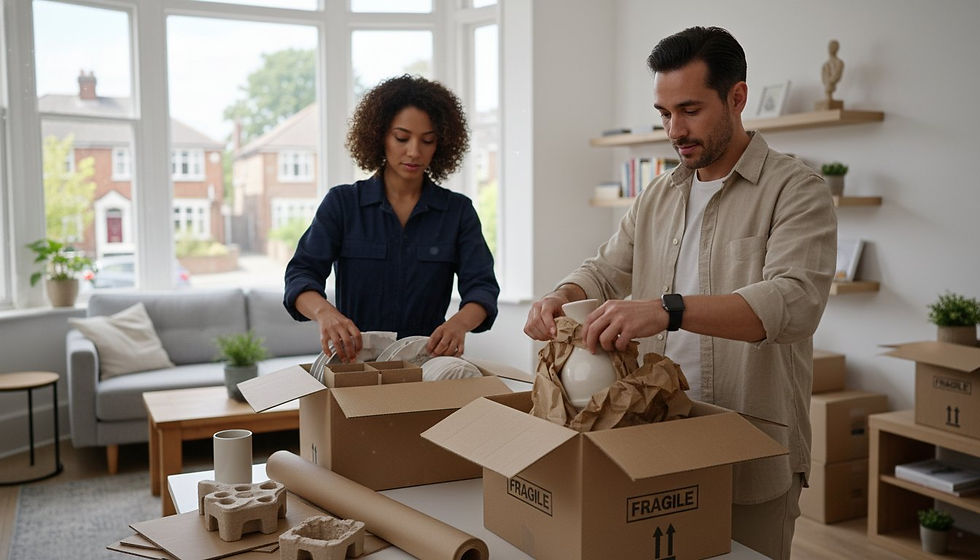
Most people believe the secret to a safe move is using as much bubble wrap as possible, but professional packing isn't about volume; it's about eliminating movement through structural layering. With the average home now containing over 100,000 items, it's natural to feel overwhelmed by the task of safeguarding your most delicate possessions. If you're wondering how to pack fragile items for moving so they survive the journey in one piece, you aren't alone.
We understand that these aren't just objects; they're heirlooms and memories that deserve meticulous care. You want a systematic, stress-free process that replaces moving day anxiety with total confidence. This professional 2026 guide will help you master the art of protection, ensuring every piece arrives at your new destination intact and secure.
We'll walk you through the exact materials to buy, from reinforced boxes that cost between £1.50 and £2.50 to modern, sustainable mushroom-based packaging. You'll learn how to layer your items like a pro, whether you're filling 40 or 60 boxes.
Key Takeaways
Build a secure foundation using a three-inch layer of crumpled paper to absorb shocks before you begin stacking your belongings.
Discover professional methods like the "Burrito Wrap" and bundle wrapping to give your plates and glassware collective strength.
Learn how to pack fragile items for moving using the "X" tape method to prevent mirrors and framed art from shattering during transit.
Master the "Heavy-to-Light" hierarchy to ensure your boxes remain stable and your most delicate pieces stay protected at the top.
Understand how professional packing choices impact your transit insurance and why addressing the "Liability Gap" is vital for your peace of mind.
The Essential Packing Arsenal: Materials for Maximum Protection
Quality materials form the backbone of a successful move. You can't expect a standard single-wall box to protect your grandmother's china when it's stacked at the bottom of a van. Professional-grade double-walled boxes are non-negotiable for anything breakable. These containers feature two layers of corrugated fluting that provide superior crush resistance and stacking strength. When you're learning how to pack fragile items for moving, your choice of cushioning is just as vital as the box itself. Bubble wrap comes in various sizes; use small bubbles to protect delicate surfaces from scratches and large bubbles to create a thick, protective buffer around heavier items like large vases.
Avoid using standard newsprint for your most precious pieces. The ink can transfer and permanently stain porous surfaces like unglazed ceramics or fine bone china. Instead, opt for acid-free tissue paper to safeguard delicate finishes. Once your items are wrapped, you'll need to address the gaps. Void fillers like starch-based packing peanuts or air pillows ensure that nothing shifts during transit. If an item moves inside the box, it's at risk of breaking. Specialist containers, such as telescopic boxes for mirrors or cell-dividers for glassware, provide a bespoke level of security that standard boxes simply can't match. These dividers create individual "parking spaces" for your glasses, preventing them from knocking against each other.
Choosing the Right Box Size
Small boxes are often your best friend. While it's tempting to consolidate everything into one large container, heavy items like books or ceramics should always go into smaller boxes. This prevents the box from becoming too heavy to handle safely and reduces the risk of the bottom falling out. Follow the "goldilocks" rule: the box should be full enough to prevent items from shifting, but not so heavy that it compromises the structural integrity of the cardboard. High-quality corrugated cardboard with a visible "C-flute" thickness of about 4mm offers the best balance of weight and protection for a typical move.
Eco-Friendly Packing Alternatives
Sustainability is a major trend in 2026, with a growing demand for biodegradable materials. Honeycomb paper wrap is an excellent alternative to plastic, offering a unique hexagonal structure that interlocks to provide shock absorption. You can also use starch-based packing peanuts that dissolve in water, replacing traditional polystyrene. For a practical approach, use your own household textiles. Towels and linens make fantastic secondary shock absorbers and help you pack two things at once, which is helpful when you're managing the 40 to 60 boxes required for a typical 3-bedroom home.
The Science of Wrapping: Professional Techniques Explained
Wrapping a delicate item is more than just covering it in paper; it is about managing the physics of internal pressure. Most breakages happen because items shift and exert force on each other within the box. If you want to master how to pack fragile items for moving, you need to think like an engineer. Professional packers use the concept of "crumple zones." By loosely crumpling the first layer of paper before adding a tight outer layer, you create a pocket of air that absorbs vibration. This technique is especially vital for items with vulnerable points like teapot spouts, trophy arms, or delicate handles. We always wrap these protrusions individually first with a "bandage" of tissue to bring them flush with the rest of the object. This ensures that any pressure from the stack is distributed evenly across the surface rather than snapping a thin piece of ceramic.
For crystal and fine glassware, we follow the "Stem-First" rule. The stem of a wine glass is its most fragile part, often breaking under the weight of the bowl if the box is jarred. By wrapping the stem in several layers of tissue until it matches the diameter of the glass bowl, you create a solid cylinder that resists snapping. Following expert moving tips on weight distribution is equally important for the longevity of your possessions. You should also consider "bundle wrapping" for items like silverware or sturdy mugs. Grouping three or four similar items together in a single, thick wrap creates collective strength. If the thought of wrapping 100,000 household items feels overwhelming, you can always get in touch for a chat about our professional packing options.
The Burrito Wrap for Ceramics
The burrito wrap is a multi-layered rolling technique that creates air pockets between items. To execute this, place a plate on the corner of a stack of packing paper and fold the corner over it. Roll the plate one full rotation, place a second plate on top, and continue rolling until you have a bundle of three or four. Always pack these bundles into the box on their edges. A ceramic plate is significantly stronger when standing vertically; stacking them flat is the most common cause of pressure cracks during a move.
Safeguarding Glassware and Stemware
Start by stuffing the "globe" or interior of the glass with crumpled acid-free tissue paper. This internal support prevents the glass from collapsing inward if it's squeezed during the journey. After the interior is secure, wrap the stem separately to reinforce it before applying the final outer layer of bubble wrap. Using cardboard cell dividers is the final step in ensuring zero glass-on-glass contact. These dividers act as internal scaffolding for the box, preventing the weight of other items from crushing your delicate stemware. If the thought of packing is already feeling overwhelming, you can request a bespoke removals quote to see how professional support can lighten your load.

Different possessions demand distinct protection strategies. When you're determining how to pack fragile items for moving, a one-size-fits-all approach often leads to heartbreak. For framed art and mirrors, the "X" tape method is your first line of defence. By applying a large cross of masking tape from corner to corner across the glass, you create a tension web. While this doesn't make the glass unbreakable, it ensures that if a crack does occur, the shards stay in place rather than falling inward to lacerate the canvas or photograph beneath. For the frames themselves, we recommend using plastic or cardboard corner protectors before sliding the piece into a telescopic box.
Large vases and sculptures require a "box-in-a-box" technique to survive the journey. Start by filling the internal cavity of the vase with crumpled acid-free paper to provide internal bracing. Wrap the item in several layers of large-bubble wrap, then place it in a small box filled with packing peanuts. Finally, place that smaller box inside a larger, double-walled container with at least two inches of padding on all sides. This creates a multi-stage shock absorption system that can withstand the vibrations of a long-distance transit. For musical instruments like guitars or violins, remember to loosen the strings by a half-step. This prevents the bridge from snapping under the pressure of temperature fluctuations during the move.
Protecting Flat Screens and Monitors
Modern LED and OLED panels are incredibly sensitive to static and pressure. You should never apply standard bubble wrap directly against a screen. The plastic can create static discharge that damages the pixels, and the bubbles themselves can leave circular "pressure marks" on the delicate coating. Instead, use anti-static foam or a clean, soft moving blanket as the primary layer. As of January 2026, the industry standard for high-end electronics emphasizes upright transit. These screens are designed to support their own weight vertically; laying them flat makes them susceptible to internal cracking from even minor road bumps.
Handling Antiques and Heirlooms
Before you begin packing, inspect your antiques for existing stress fractures or loose joints. These weak points are where a break is most likely to occur. It's vital that adhesive tape never touches the surface of antique wood or gilt frames, as it can strip away centuries-old finishes in a second. Antiques require "breathable" wrapping like cotton sheets or acid-free paper to prevent moisture traps during transit. This is particularly important given that the average home contains over 100,000 items, and the sheer volume of a move can lead to fluctuating humidity levels inside a van during a typical intrastate journey.
The Structural Box: Loading for Zero Movement
Once your items are meticulously wrapped, the focus shifts to the container's internal architecture. A box is only as strong as its weakest point, which is why we insist on a "Foundation Layer" for every fragile shipment. Start by placing 3 inches of crumpled packing paper at the base of your double-walled box to create a bespoke shock absorber. This layer acts as a buffer against the vibrations of the van, protecting your belongings from the hard surface of the floor. When you are learning how to pack fragile items for moving, remember that the goal is to create a solid, immovable unit within the cardboard walls.
Stacking follows a strict "Heavy-to-Light" hierarchy. Place your densest, most robust bundles at the bottom and save the uppermost space for your lightest glassware or electronics. You must eliminate "The Void" by filling every cubic centimetre of air space with void fillers like packing peanuts or paper. If an item has room to shift even a fraction of an inch, it can gain enough momentum to break when the van encounters a sudden stop. Before you seal the box, perform the "Shake Test." Gently move the box back and forth; if you hear even the slightest rattle, you need more padding.
To secure the weight, we use the "H-Tape" method. This involves taping the centre seam and then taping across the two side seams to form a capital "H." This technique reinforces the box’s structural integrity and prevents the flaps from bowing under pressure. If you’re unsure about the structural integrity of your boxes, book a professional packing survey to ensure your items are ready for the road.
Reinforcing the Box Structure
Placement matters more than quantity. Instead of wrapping tape around the box randomly, focus on creating a rigid frame by sealing every open edge. Watch closely for "box bulge." If the sides of the container are bowing outward, it indicates that the internal items are poorly distributed. A bulging box is prone to collapsing when stacked, which can lead to a domino effect inside the moving vehicle that compromises everything around it.
Labelling for Transit Success
Clear communication is the final step in safeguarding your possessions. Place "Fragile" labels on at least three sides of the box to ensure they are visible regardless of how the box is stacked. Use directional "This Way Up" arrows to guide the movers, ensuring that delicate items like stemware or upright electronics remain in their intended orientation. Room-specific inventorying, often managed through digital tracking or QR codes in modern 2026 moves, reduces unnecessary handling and helps you locate your essentials the moment you arrive at your new home.
Peace of Mind: When to Choose Professional Packing Services
Deciding whether to take on the challenge yourself or hire experts often comes down to the value you place on your time and your possessions. While learning how to pack fragile items for moving empowers you to handle smaller relocations, the scale of a full family move is significant. A typical 3-bedroom house requires 40 to 60 boxes. Professional packing for a home of this size usually ranges between £450 and £650 according to industry data from April 2026. When you consider that professional packers work at a rate of £20.00 to £30.00 per hour, you aren't just paying for labour. You're investing in a streamlined timeline that transforms a week of stress into a single afternoon of controlled efficiency.
One of the most critical factors is the "Liability Gap." If you pack your own boxes, most transit insurance policies only cover the total loss of the box, not the breakage of individual items inside.
Professional teams also bring specialist equipment that isn't easily accessible to the average mover. We use bespoke crates for pianos and fine art, ensuring that even the most awkward shapes are secured against the "smooth current" of the journey. This level of preparation prevents the logistical hurdles that often slow down a move, allowing the entire process to run like clockwork.
Insurance and Protection
Choosing professional services bridges the gap between basic coverage and total peace of mind. It provides a clear line of accountability. When our team handles your belongings, we assume the responsibility for their safe arrival. This psychological benefit is immense. You can focus on your family and your new start, knowing that your most precious heirlooms are under the protection of experts who understand the "why" behind every layer of wrap.
The Goldfish Moving Experience
At Goldfish Removals, we treat every item as if it were our own. Our "Reliable Expert" promise means we don't just fill boxes; we create meticulous, bespoke relocation plans tailored to your specific needs. Whether you have a single irreplaceable sculpture or a vast collection of delicate glassware, we have the tools and the temperament to manage your move with genuine kindness. Speak to our team for a bespoke packing and moving quote to see how we can bring a sense of calm to your moving day.
Step Into Your New Home with Total Confidence
You now have a professional blueprint for protecting your most cherished belongings. By mastering the science of structural layering and selecting the right double-walled materials, you've taken the most important step toward a breakage-free journey. Knowing how to pack fragile items for moving isn't just about the physical wrap; it's about the peace of mind that comes from a systematic, expert approach. Whether you're managing 40 boxes or 60, these techniques ensure your heirlooms remain secure from start to finish.
If the scale of your move feels like a heavy current to swim against, our team is ready to help you glide through the process. Goldfish Moving & Storage brings over a decade of relocation expertise and a dedicated team of packing specialists to every home. We provide bespoke transit insurance options to ensure your high-value possessions are protected by more than just bubble wrap. Get a stress-free moving and packing quote from Goldfish Moving & Storage to start your journey with ease.
Your next chapter is waiting. With a solid plan and the right support, you can look forward to a seamless transition and the joy of seeing your favourite items arrive perfectly intact.
Frequently Asked Questions
How far in advance should I start packing fragile items?
You should begin packing your most delicate possessions at least four weeks before your scheduled move date. Fragile items typically require three times as much preparation as standard household goods. Starting early allows you to handle each piece with the meticulous care it deserves, ensuring you don't rush through the final 40 or 60 boxes during the high-pressure days before the van arrives.
Can I use newspaper to wrap my fine china?
No, you shouldn't use standard newspaper for your fine china or unglazed ceramics. The acidic ink can permanently leach into the porous surfaces of your dishes, especially during long-distance transit where temperatures fluctuate. Professional packers exclusively use acid-free tissue paper or clean, unprinted packing paper to safeguard these finishes and prevent any chemical staining or damage.
What is the "Shake Test" in professional packing?
The "Shake Test" is a simple but effective quality control method used to verify the security of a box. Once you've finished layering your items and added your void fillers, gently lift the box and give it a slight rattle. If you hear any clicking or shifting, it means there's still air space inside. You must add more padding until the box is completely silent to ensure zero movement during the journey.
Do I need special insurance if I pack fragile items myself?
You should strongly consider "Full Value Protection" if you're managing the packing process independently. As of March 2026, most standard transit insurance policies only cover items packed by the owner at £0.30p per pound. This means a broken five-pound vase would only yield £5 in compensation. Many insurers now require a professional inventory or a "Pack and Prep" service for high-value claims to be fully honoured.
How do I pack a TV for moving if I don’t have the original box?
Use a specialized heavy-duty telescopic box designed specifically for flat screens. Wrap the panel in anti-static foam first to prevent pixel damage, then add two layers of large-bubble wrap for shock absorption. Always transport the unit in an upright position. Modern LED and OLED panels are designed to support their own weight vertically; laying them flat often leads to internal pressure cracks that aren't visible until you power the unit on.
Is bubble wrap or packing paper better for protecting glassware?
A combination of both materials is the most effective way to ensure your glassware survives the trip. Use packing paper as the initial layer to fill internal voids and provide a breathable barrier, then wrap the exterior in bubble wrap for impact resistance. This multi-layered technique is a cornerstone of how to pack fragile items for moving, as it addresses both structural integrity and external shock protection simultaneously.
What should I do if a fragile item breaks during the move?
Document the damage immediately by taking clear, high-resolution photographs of the item and the box it was in. You should notify your moving company within 24 hours of the delivery to begin the formal claims process. Keep all broken pieces and the original packing materials. Under 2026 transit regulations, insurers often require a physical inspection of the packing method before they will approve a pay out for high-value heirlooms.
How many layers of bubble wrap are needed for high-risk items?
Apply a minimum of three layers of bubble wrap for high-risk items like heavy sculptures or large mirrors. Ensure each layer overlaps the previous one by 50 percent to eliminate any weak points in the protective shell. For the best results, keep the bubbles facing inward toward the item. This allows the air pockets to contour to the object's shape, providing the most direct and effective cushioning against vibrations and bumps.


Comments