
How to Move a Business to New Premises: The Ultimate 2026 Relocation Guide


What if the most stressful weekend of your professional career actually became a catalyst for growth rather than a logistical nightmare? It's completely natural to feel a sense of trepidation when considering how to move a business to new premises. You're likely balancing the fear of IT infrastructure failing at the worst moment against the pressure of keeping your team motivated and your budget strictly under control. In a landscape where office utilisation has reached 53% this year, the highest level since 2020, getting this transition right is more critical than ever.
We believe a successful relocation is measured by the speed of your resumption, not just the arrival of your boxes. This is why we've developed an expert-led framework designed to protect your most valuable assets and ensure your operations don't miss a single beat. You'll gain the clarity needed to present a precise budget to your directors, including insights into 2026 tax regulations like the 100% bonus depreciation for certain property. This guide provides a stage-by-stage roadmap for a move completed over a weekend, ensuring your team arrives on Monday morning to a fully functional, inspiring new workspace.
Key Takeaways
Appoint a dedicated internal Move Coordinator to manage cross-departmental tasks and keep your core relocation objectives on track.
Discover how to move a business to new premises whilst ensuring the site has the electrical and IT capacity to support your 2026 growth.
Safeguard your digital infrastructure by prioritising a full IT audit and partnering with specialists to handle delicate hardware decommissioning.
Reduce employee anxiety and foster a sense of ownership by involving your staff in the design and layout of their new workspace.
Maintain business continuity by scheduling your relocation during low-activity periods and establishing a central command centre for real-time problem-solving.
Table of Contents
Strategic Planning: Establishing the Framework for Your Business Move
Strategic planning acts as the compass for your entire relocation project. As you consider how to move a business to new premises, the first step is defining exactly why you are doing it. Is the goal to access a better talent pool, reduce overheads, or perhaps to accommodate a shift towards hybrid work? Clear objectives serve as a filter for every decision that follows, from the square footage you lease to the specific borough you choose. It's about ensuring your business continues to thrive during the transition, rather than just surviving it.
Establishing a 12-month countdown is the most effective way to lower stress levels. Whilst some smaller firms might manage on a shorter timeline, a year allows you to navigate lease negotiations and vendor lead times without the pressure of a looming deadline. This period is also the perfect time to conduct a thorough inventory audit. Deciding what to move, sell, or recycle now prevents you from wasting resources on transporting redundant equipment. It’s a chance to declutter your operations and start fresh in your new professional home.
Appointing Your Relocation Project Team
Your internal Move Coordinator is the linchpin of this operation. This individual needs the authority to manage cross-departmental tasks and should possess a deep understanding of both your operational flow and IT requirements. By understanding the role of a moving company and how it interacts with your internal teams, the coordinator can prevent bottlenecks. You should also define clear roles for department heads to manage their specific zones. Establish a weekly reporting rhythm early on. This ensures everyone stays accountable and that the master schedule remains on track as you learn how to move a business to new premises with precision.
Setting a Realistic Relocation Budget for 2026
A transparent budget is your best tool for gaining director-level approval. Beyond the obvious lease costs, you must factor in professional fees, insurance, and the "dilapidations" required to return your current premises to its original state. We recommend setting aside a contingency fund of at least 10 to 15% to handle the unforeseen hurdles that inevitably arise during complex moves. In 2026, businesses can also benefit from 100% bonus depreciation for some types of property, so consult with your financial team to maximise these advantages. Investing in professional packing services is another vital line item. It provides the psychological reassurance that your high-value assets and delicate equipment are protected by experts who understand the nuances of commercial logistics.
Selecting New Premises and Your Removals Partner
Finding the right location is about more than just square footage or a prestigious postcode. When you are researching how to move a business to new premises, you must balance the human needs of your team with the technical requirements of your operations. Evaluate potential sites in Surrey based on employee commute times and proximity to local amenities. A beautiful office loses its charm if your staff find the daily journey exhausting or lack nearby options for lunch and socialising. It’s also vital to ensure the new site has the required electrical and IT capacity for your 2026 growth. High-speed fibre and sufficient power distribution are the lifeblood of modern business, and retrofitting these can be a significant unbudgeted expense.
Once you’ve shortlisted locations, you need a partner who understands the high stakes of commercial relocation. Vet firms based on their specific experience with office removals rather than general domestic moves. Moving a business requires a different level of precision and specialised equipment. Always request a fixed-fee quote. This ensures budget transparency and prevents the "hourly-rate creep" that can often occur when unexpected delays happen on the road. Integrating tips for a stress-free move from industry leaders can help you narrow down your criteria for a truly reliable removals partner.
Logistical Site Surveys: Beyond the Floorplan
A physical site survey is essential for identifying potential bottlenecks before moving day arrives. Check for loading bay restrictions and lift dimensions at both your current and future sites. Will your largest conference tables fit through the service lift? If your new office is situated in a busy town centre like Farnborough or Guildford, identify any parking permits or specific access requirements for large removal vehicles. Assessing the "flow" of the new office allows you to plan the most efficient unloading sequence. This ensures that the most critical items, such as your servers and core workstations, are the first to be positioned.
Choosing the Right Commercial Removal Company
Trust is built on transparency and protection. Verify the company’s Goods in Transit and Public Liability insurance levels to ensure your equipment is fully covered against every eventuality. Look for specialists who offer dismantling and reassembly of complex office furniture, as this saves your own team hours of frustration. If there is an unavoidable gap between your leases, enquire about secure storage solutions. Having a safe, climate-controlled environment to hold your assets during a transition provides immense peace of mind. If you're feeling overwhelmed by the logistics, you might find it helpful to speak with a professional coordinator to clarify your next steps.
Technical Logistics: Safeguarding IT and Business Infrastructure
Your digital infrastructure is the heartbeat of your operations. When you are orchestrating how to move a business to new premises, the preservation of your data and the continuity of your IT systems must be your highest priority. We recommend starting with a comprehensive IT audit to map every server, workstation, and peripheral device across your current site. This blueprint allows you to visualise exactly how your network will be reconstructed. Before a single cable is unplugged, implement a rigorous backup protocol for all business-critical data. Store these backups in multiple secure locations to ensure that, even in the unlikely event of hardware damage, your intellectual property remains untouched.
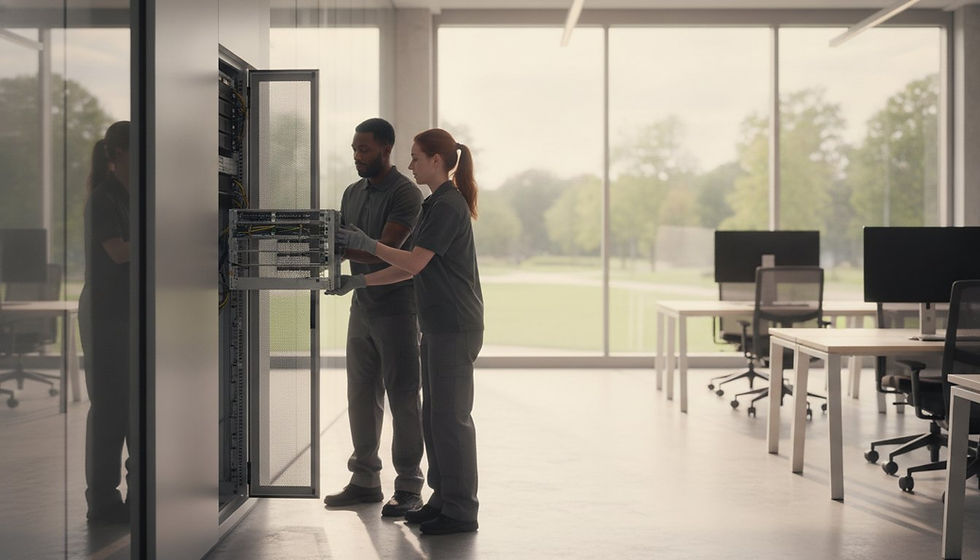
Organising the decommissioning of hardware is a task best left to a specialist IT relocation team. These professionals understand the delicate internal components of high-end servers and the specific handling requirements for sensitive electronics. As you consult the SBA guide to business expansion, you'll find that technical readiness is often the deciding factor in how quickly a new location becomes profitable. To facilitate a "plug-and-play" experience on Monday morning, label every cable and port with precision. This methodical approach removes the guesswork for your staff and allows them to resume their duties immediately upon arrival.
Connectivity and Telecoms Migration
Connectivity shouldn't be an afterthought. Installation of commercial internet lines can take between 60 to 120 days, so coordinate with your Internet Service Providers (ISPs) at least four months in advance. Ensure your high-speed fibre-optic connection is live and tested weeks before the physical move. Whilst the new office is still empty, test your Wi-Fi mesh network to identify any dead zones caused by the building’s structure. This is also the time to plan the redirection of physical mail and ensure your dedicated phone lines are migrated without a lapse in service.
Handling Specialist Equipment and Sensitive Assets
Expensive equipment requires more than just standard padding. Identify any items that need climate-controlled transport or anti-static packing materials to prevent internal circuitry damage. We suggest creating a high-value asset register for both insurance and tracking purposes; remember that standard moving insurance often provides limited coverage, so consider supplemental protection for your most costly machinery. Use a colour-coded labelling system to match equipment to its exact desk location. This ensures that when our team unloads the vehicles, every piece of technology finds its rightful place with surgical accuracy.

The Human Element: Communication and Change Management
A business move represents a significant shift in the daily lives of your employees. Beyond the technical logistics we’ve already explored, understanding how to move a business to new premises requires a deep focus on the people who make your company work. Relocation anxiety is real; it often stems from concerns about longer commutes, changes to local routines, or the loss of a favourite lunch spot. To mitigate this, develop a transparent internal communication plan as early as possible. When staff feel informed, they feel valued and respected. This proactive approach transforms a potentially disruptive event into a shared journey toward a better working environment.
Consulting with your team on the new office layout is a powerful way to foster a sense of ownership. Whether it's choosing the configuration of break-out zones or the placement of communal coffee stations, involving employees ensures the new space meets their practical needs. Once the move date is set, provide clear Welcome Packs. These should include detailed maps of local transport links, parking arrangements, and new office protocols. Providing this information ahead of time replaces uncertainty with a sense of prepared excitement. When you are learning how to move a business to new premises, remember that a happy team is the most important asset you’ll transport.
Employee Engagement and Morale
Hosting a Town Hall meeting allows you to frame the relocation as a positive milestone for the company’s future. It is a chance to explain the benefits, such as better facilities or a more collaborative environment. If your new site is in Surrey or Hampshire, organise a physical site visit or a virtual tour before the move. This helps the space feel familiar before the first day. Establish a feedback loop early; this could be a dedicated email address or a weekly Q&A session where staff can raise concerns about the transition without fear of judgement.
External Stakeholder and Legal Notifications
Your communication strategy must also extend outwards to maintain professional continuity. Prepare a comprehensive checklist of every digital and physical touchpoint that requires an address update. You must notify HMRC of your change of address to remain compliant with tax and payroll regulations. Inform your bank, insurance providers, and local council at least 30 days in advance to avoid service interruptions. On the day of the move, ensure your Google Business Profile and website metadata are updated to reflect the new location. This prevents client confusion and protects your local search presence.
Managing the human side of a move is complex, but you don't have to do it alone. Our team can help you plan the logistics so you can focus on supporting your people; contact us today for a tailored office removals plan.
Executing the Move: Minimising Downtime and Settling In
Executing the move is the culmination of months of meticulous preparation. It's the moment where theory meets reality. To protect your client service levels, schedule the physical relocation for a weekend or a designated low-activity period. This timing is the gold standard for anyone mastering how to move a business to new premises, as it aims for that elusive goal: zero Monday morning downtime. Establish a Move Day Command Centre at the new site. This acts as a central hub where your Move Coordinator can handle real-time logistical queries and direct the flow of traffic as items arrive. Before handing back the keys, conduct a final walkthrough of your old premises to ensure no essential documents or equipment have been overlooked in the transition.
Prioritise the setup of communal areas and core IT infrastructure as soon as the first vehicles are unloaded. Whilst your technical team focuses on the workstations, having the kitchen and break-out zones functional provides a sense of normalcy for the staff helping with the transition. The final phase of how to move a business to new premises is about more than just logistics; it's about creating a welcoming atmosphere. Plan a Welcome Event for the first official morning in the new office. A simple breakfast or a ribbon-cutting ceremony celebrates the hard work of the move and helps the team settle into their new favourite workspace with a positive mindset.
The Moving Day Protocol
Assign Floor Wardens at both the old and new locations to act as the primary points of contact for the professional removal team. Their role is to provide immediate direction, ensuring that every crate and desk finds its correct position without delay. Ensure all staff have cleared their personal items into clearly labelled crates well in advance. We prioritise the safe arrival and placement of all high-priority IT equipment first. This strategy ensures that when your team walks in, the office doesn't just look functional; it feels like a ready-to-use professional environment from the very first hour.
Post-Move Review and Optimisation
The process doesn't end when the last van is unloaded. Create a comprehensive Snagging List during the first 48 hours to identify any minor repairs, furniture adjustments, or lighting issues that need attention. This proactive approach prevents small annoyances from becoming long-term frustrations. Gather detailed feedback from your Move Coordinator to understand what worked well; this is invaluable for any future growth planning. Finally, confirm that all security systems, access codes, and fire safety protocols are fully operational for all staff. Ensuring everyone feels safe and secure in their new surroundings is the final, vital step in a truly successful relocation.
Secure a Seamless Transition for Your Business
A successful relocation is about more than just moving desks; it's about safeguarding your company's future. By prioritising early strategic planning and maintaining open communication with your team, you've already laid the groundwork for a positive experience. You now have a clear framework for managing technical logistics and understanding how to move a business to new premises without sacrificing productivity. Whether you are downsizing for a hybrid model or expanding into a larger hub, the right partner ensures your high-value assets arrive safely and your team remains motivated.
With over a decade of commercial moving experience across Surrey and Hampshire, we understand the nuances of business continuity. Our specialist IT and equipment handling teams are ready to protect your most delicate technology, whilst our flexible hourly or fixed-fee pricing models provide the budget clarity your directors require. We invite you to request your bespoke fixed-fee office removal quote today. Let us handle the heavy lifting so you can focus on leading your business into its next exciting chapter with absolute peace of mind.
Frequently Asked Questions
How long does it take to move a business to new premises?
A typical office relocation requires a planning lead time of 6 to 12 months to ensure a smooth transition. This window allows you to navigate lease negotiations, coordinate fit-outs, and secure your preferred dates with commercial movers who often have lead times of 8 to 12 weeks. When researching how to move a business to new premises, remember that ordering internet services can take up to 120 days, making early preparation essential for business continuity.
What is the best time of week to move an office?
Friday afternoon through to Sunday evening is the most effective period to execute a commercial relocation. Moving over a weekend minimises disruption to your clients and provides a buffer for your IT team to resolve any connectivity issues before the working week begins. If your business operates 24/7, identify your lowest activity period to schedule the transition and protect your service levels from unnecessary downtime.
How much notice should I give my current landlord?
You must consult your specific lease agreement, but most commercial contracts in the UK require a formal notice period of three to six months. Failing to provide adequate notice can result in significant financial penalties or the burden of overlapping lease payments. It's professional to notify your landlord as soon as your relocation plans are finalised to discuss dilapidations and the return of your security deposit.
Do I need special insurance for moving business equipment?
Yes, supplemental insurance is highly recommended because standard moving coverage is often based on weight rather than value, which is rarely sufficient for expensive technology. This basic level of protection won't cover the full replacement cost of high-end servers or specialist machinery. We suggest verifying your Goods in Transit and Public Liability levels with your removals partner to ensure your assets are fully protected against every eventuality.
How do I ensure my IT systems are working on the first day?
Order your internet connection at least 4 months before moving day to ensure it is live and tested well in advance. Part of knowing how to move a business to new premises successfully involves conducting a full IT audit and backing up all data before hardware is decommissioned. Labelling every cable and port with surgical precision allows for a "plug-and-play" setup, ensuring your staff are fully operational the moment they arrive.
What should be included in a business relocation welcome pack?
A comprehensive welcome pack should include maps of local transport links, parking instructions, and new security access protocols for the building. It's also a thoughtful touch to include a guide to local amenities, such as the best nearby cafes for lunch or the nearest pharmacy. Providing this information helps lower employee stress levels and makes the new location feel like a welcoming professional home from the very first hour.
Should I involve my employees in the office design process?
Involving your staff in the design process fosters a sense of ownership and can significantly improve morale during a period of change. Whilst you'll make the final strategic decisions, asking for input on break-out zones or communal areas ensures the space works for those using it daily. This collaborative approach turns a logistical necessity into a positive cultural milestone that can aid employee retention and satisfaction.
How do I handle the disposal of old office furniture responsibly?
Prioritise sustainable disposal by partnering with specialist recycling firms or donating functional items to local charities and social enterprises. Many businesses find that selling redundant furniture can also help offset some of the moving costs. Always ensure that any electrical items are disposed of in strict compliance with WEEE regulations to meet your environmental obligations and avoid potential legal complications during the exit from your old site.


Comments