
Convincing Your Boss to Hire Professional Movers: A Strategic Business Case


What if the "saving" you make by handling your office move in-house actually costs your company thousands in equipment damage and lost productivity? It's a common dilemma; you want to ensure a smooth transition, yet convincing your boss to hire professional movers often feels like an uphill battle against a tight budget. You're likely worried about the safety of expensive IT kits or the very real risk of staff injuries whilst shifting heavy desks, all whilst under pressure to keep the business running.
We understand that the logistical burden of a corporate relocation is heavy, both physically and emotionally. This article will help you build a persuasive, data-driven argument that proves professional removals are a strategic investment rather than just a logistical cost. You'll learn how to demonstrate that expert help protects your team's wellbeing, secures your most valuable assets, and effectively eliminates the hidden expenses of business downtime. We will walk you through the essential evidence needed to secure a removals budget and maintain high employee morale throughout the entire transition.
Key Takeaways
Understand why tasking employees with heavy lifting is a false economy that drains productivity and valuable billable time.
Learn how to conduct a "Downtime Audit" to prove that expert IT handling prevents expensive technical delays and data risks.
Navigate HSE manual handling regulations to ensure your move remains compliant and protects the business from potential injury claims.
Build a persuasive, data-led business case for convincing your boss to hire professional movers using market diligence and risk analysis.
Discover how tailored commercial removal services can protect your staff’s wellbeing whilst keeping your operations running smoothly.
Table of Contents
Why Asking Staff to Move Office is a False Economy
A false economy is a deceptive saving that masks a much larger, trailing expense. In the context of a 2026 commercial relocation, this usually manifests as the decision to use existing staff to pack and transport office goods instead of experts. Whilst it might appear that you're saving on an upfront quote, you're actually diverting your most expensive resource, your people, away from the tasks that generate revenue. When you're convincing your boss to hire professional movers, it's vital to highlight how a professional crew operates. They use methodical systems and specialised equipment to clear a space in hours. Contrast this with a haphazard, employee-led move where boxes are overfilled and the risk of damage to property is high. Professional relocation services are designed to protect the business's assets and timeline, ensuring a fluid transition that untrained staff simply cannot provide.
The Impact on Core Business Productivity
The true cost of a DIY move is measured in lost billable hours. If a team of ten employees spends just two days packing and organising, the company loses eighty hours of primary work. This doesn't include the "recovery period" that inevitably follows. Staff who have spent their weekend or evening shifting heavy furniture are rarely at their peak performance the next morning. They arrive at the new office tired, sore, and distracted by the chaos of misplaced files. It's a poor use of resources to have highly-paid professionals performing low-skill manual labour. Every hour a developer or manager spends tape-gunning boxes is an hour they aren't driving the business forward. Expert movers eliminate this friction, allowing your team to leave their desks on Friday and resume work on Monday in a fully functional environment.
Protecting Employee Morale and Culture
Asking staff to perform tasks far outside their job descriptions can quickly erode workplace culture. A chaotic move creates long-term resentment amongst the team, especially if they feel their safety or professional boundaries are being ignored. When employees are pressured into physical labour they aren't trained for, it sends a message that their specialised skills are secondary to saving a few pounds on a removals budget. By convincing your boss to hire professional movers, you are positioning the move as an investment in the team's work environment. It shows a commitment to their wellbeing and respects the professional boundaries of their roles. A managed transition feels like an exciting new chapter for the company, rather than a stressful chore that leaves the team feeling undervalued and physically strained.
Calculating the Real Cost of Business Downtime
To build a robust business case, you must first quantify the true cost of relocation downtime. Most managers only look at the invoice from a removal company, but the real expense lies in the hours your team is unable to respond to clients, process orders, or access critical systems. Performing a "Downtime Audit" reveals the financial impact of every hour your business remains in boxes. Industry data for 2026 suggests that for small businesses, the cost of downtime can range between $2,000 and $10,000 per hour. When you present these figures, convincing your boss to hire professional movers becomes a conversation about risk management rather than just a line item in the budget.
IT and Infrastructure Risks
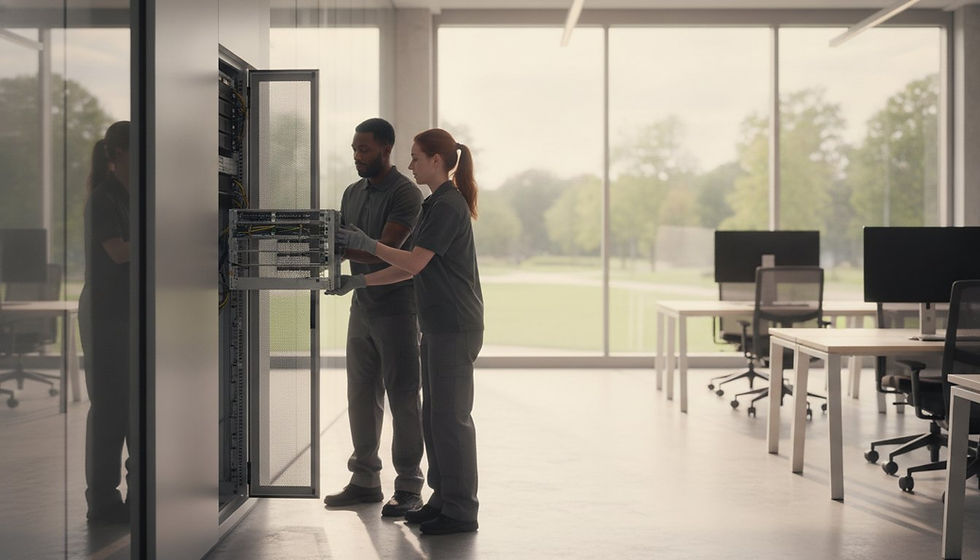
Hardware is both fragile and expensive. When untrained staff handle servers, high-end monitors, or delicate networking equipment, the risk of static discharge or physical impact increases exponentially. The cost of replacing damaged hardware often dwarfs the price of professional packing. Furthermore, IT disconnection and reconnection alone typically cost £500 or more, a figure that rises quickly if cables are misplaced or ports are damaged during a rushed move. Expert movers use anti-static materials and specialised, vibration-resistant crates to ensure your infrastructure arrives intact. This level of protection is essential for modern Surrey businesses that rely on seamless digital connectivity to survive. Ensuring your data remains secure and your hardware functional is the primary goal of any professional transition.
The Opportunity Cost of an Extended Move
Consider the timeline of a typical relocation. A professional crew can often execute an office swap in a matter of hours, whereas a DIY attempt frequently drags into a multi-day struggle. Every moment your team is offline represents an opportunity cost. Missing a single client deadline or failing to answer an urgent enquiry can damage your reputation far beyond the immediate financial loss. Professional project management ensures "Monday morning readiness", where every PC is plugged in and every phone line is active the moment your staff walk through the door. If you are looking for a partner to manage this transition with precision, our office removals specialists can provide a tailored plan that fits your specific schedule, protecting your "front of house" reputation whilst you focus on growth.
Health, Safety, and Liability: Protecting the Business
Every employer in the UK carries a legal duty under the Manual Handling Operations Regulations 1992 to protect their team from injury. This isn't merely a suggestion; it's a statutory requirement to assess and reduce risks associated with moving loads. When you're convincing your boss to hire professional movers, it's vital to frame the decision as a critical shield against legal liability. Whilst your team might be willing to help, they lack the training to navigate employee health and safety concerns like improper lifting techniques or navigating cluttered pathways with heavy equipment. In the UK, 17% of non-fatal workplace injuries reported under RIDDOR are caused by handling, lifting, or carrying. Entrusting these tasks to untrained staff doesn't just invite accidents; it invites scrutiny from the Health and Safety Executive (HSE).
The Legal Risks of Manual Handling
The "just lifting a box" mindset is a legal minefield for modern directors. Without a formal TILE (Task, Individual, Load, Environment) assessment, the company is vulnerable. A single back injury claim can cost a business tens of thousands in legal fees and compensation, far exceeding any perceived saving from a DIY move. Professional crews mitigate these risks using specialised equipment like stair-climbers, dollies, and hydraulic lifts. They provide formal Risk Assessments and Method Statements (RAMS) before a single item is moved. This documentation is your proof of due diligence, ensuring that if an incident does occur, the business has followed every necessary protocol to protect its people.
Insurance Coverage: Professional vs. Internal
Standard business insurance policies rarely extend to goods in transit when they are being moved by employees. If a staff member drops a £2,000 server or trips whilst carrying a filing cabinet, the company is often left to foot the bill for both the damage and the potential injury claim. Professional removals companies provide comprehensive Goods in Transit and Public Liability insurance as standard. This creates a secure perimeter around your assets, moving the financial risk from your balance sheet to the mover's policy. Professional liability cover is an absolute necessity for any commercial move to ensure that unforeseen accidents do not become permanent financial burdens. By convincing your boss to hire professional movers, you are securing the peace of mind that comes from knowing every desk, screen, and staff member is fully protected under an expert's care.

How to Present a Professional Moving Proposal to Your Manager
Presenting a relocation plan requires more than just a list of prices; it needs a narrative of business continuity. Managers and directors prioritise stability and risk mitigation. When you begin the process of convincing your boss to hire professional movers, you should lead with market diligence. Gathering three competitive quotes is the standard for corporate procurement, but the lowest price shouldn't be your only metric. Instead, frame your proposal around the "Risk vs. Reward" balance. Show them that while an internal move looks cheaper on paper, the reward of a managed service is a business that remains fully operational. You aren't just asking for a budget; you're proposing a strategy to protect the company's revenue stream during a period of significant change.
Structuring the Pitch
Your proposal should follow a logical, three-step progression that mirrors the concerns of a senior stakeholder. First, present a clear timeline that highlights the potential for near-zero downtime. Explain how a professional crew can execute an overnight or weekend swap, ensuring that staff leave one office on Friday and arrive at a fully functional desk on Monday morning. Second, include a summary of the safety audit. Remind them that professional movers provide Risk Assessments and Method Statements (RAMS), which shifts the burden of liability away from the company directors. Finally, compare the removal fee against the cost of lost billable hours. If your team earns the company more per hour than a mover costs, the financial choice becomes obvious. Request a professional office removals quote to start building your case with concrete figures and tailored timelines.
Handling Objections Professionally
Expect pushback, often in the form of "we can just hire a van" or "we did it ourselves last time". Address these by focusing on the hidden variables. A self-drive van lacks the specialised transit insurance and hydraulic lifting equipment required for heavy office furniture. It also places your employees in a position of physical risk that standard business insurance may not cover. If your manager mentions a previous DIY success, gently point out that the business has likely grown in complexity since then. Larger teams, more sensitive IT infrastructure, and stricter 2026 health and safety expectations make yesterday's methods obsolete. Emphasise the value of a fixed-fee quote, which provides budget certainty and prevents the "cost creep" of fuel, packing materials, and potential London Congestion Charges, currently set at £18 per day. This approach replaces anxiety with a sense of controlled, professional efficiency.
Choosing Goldfish Moving & Storage for Your Surrey Office Move
Selecting the right partner is the final, most critical step in convincing your boss to hire professional movers. Goldfish Moving & Storage brings over a decade of specialised experience in Hampshire and Surrey commercial removals, offering a level of precision that generalist firms often lack. We understand that every business has unique rhythms. That's why we provide hourly-rate commercial services, giving you maximum flexibility to scale our involvement based on your specific needs and budget. Whether you are moving a boutique studio or a large corporate headquarters, our team acts as the primary protector of your assets, from delicate IT infrastructure to high-value fine art.
Our deep local knowledge of business hubs like Farnborough, Guildford, and Aldershot allows us to navigate logistical hurdles with ease. We know the parking restrictions, the narrow access points, and the quickest routes to ensure your equipment arrives on time. This local expertise significantly speeds up the moving process, reducing the risk of the business downtime we discussed earlier. By choosing a team that understands the regional landscape, you add an extra layer of reliability to your business case.
Tailored Business Relocation Solutions
We provide a comprehensive suite of services designed to remove every friction point from your transition. Our team handles everything from supplying high-grade packing materials to the technical reassembly of complex office furniture. If your new premises aren't quite ready, our secure storage solutions offer a safe harbour for your equipment, allowing for a staggered or phased move that doesn't disrupt your daily operations. We pride ourselves on a person-centred approach, treating your staff's belongings with the same care and attention we give to our own. This methodical rhythm provides the structure and predictability that a company in transition craves.
Next Steps: Get Your Professional Quote
The journey toward a successful relocation begins with a simple, transparent consultation. We conduct thorough site surveys to understand the exact scope of your move, ensuring there are no hidden surprises on the big day. A fixed-fee quote from Goldfish is often the most powerful tool in your arsenal for securing budget approval, as it provides the financial certainty that directors crave. It demonstrates that you have performed your due diligence and have a plan for every industry challenge. Take the first step in protecting your company’s future by reaching out to our experts. Book your office removal survey with Goldfish Moving & Storage today to receive a tailored plan that ensures your business moves forward without looking back.
Securing a Seamless Future for Your Business
A successful office relocation is defined by what doesn't happen. No damaged servers, no injured staff, and no lost revenue due to extended downtime. By framing the move as a business continuity strategy, you move the conversation away from simple costs and toward long-term security. Successfully convincing your boss to hire professional movers ensures your team remains focused on their core roles whilst experts handle the heavy lifting. This approach protects your company's most valuable assets and maintains high morale throughout the transition.
With over 10 years of experience across Surrey and Hampshire, Goldfish Moving & Storage specialise in the delicate relocation of IT equipment and office infrastructure. Our comprehensive Public Liability and Goods in Transit insurance provide the ultimate safety net for your business. We invite you to Request a Professional Office Removal Quote and take the first step toward a perfectly organised move. You have the data and the strategy; now it's time to lead your business into its next chapter with confidence and ease.
Frequently Asked Questions
Is it legal to ask my employees to move office furniture in the UK?
It is legal to ask staff to assist, but you must adhere strictly to the Manual Handling Operations Regulations 1992. This involves conducting a thorough risk assessment to identify potential hazards for every individual involved. If a staff member sustains an injury whilst performing tasks outside their usual job description, the business could face significant legal consequences. Most companies find that the liability risk outweighs any potential saving, making professional help the more compliant choice.
Does our business insurance cover items if we move them ourselves?
Most standard business insurance policies exclude "goods in transit" unless you have specifically added a commercial removals extension. If an employee drops an expensive server or damages furniture during a DIY move, the company usually has to absorb the full replacement cost. Professional movers provide their own comprehensive Goods in Transit and Public Liability insurance. This ensures your assets are protected by an external policy, keeping your company’s financial interests secure throughout the transition.
How much downtime should we expect during a professional office move?
With a professional crew, downtime is often kept to near-zero. Experts typically organise moves for evenings or weekends to ensure "Monday morning readiness" for your team. Whilst a DIY move often stretches into the working week as staff struggle with packing, a managed project follows a strict timeline. This efficiency allows your digital and physical doors to remain open, protecting your revenue and ensuring that your clients experience no disruption in service.
What is a RAMS document and why does my boss need to see it?
RAMS stands for Risk Assessment and Method Statement. It is a detailed document outlining exactly how the removals team will execute the move whilst identifying and mitigating potential hazards. Your manager needs to see this because it serves as formal evidence of the company’s commitment to health and safety. It provides a clear audit trail that protects the business from liability and ensures the project follows a structured, professional plan that meets modern safety standards.
Can professional movers help with IT and server relocation?
Specialist commercial movers are fully equipped to handle delicate IT infrastructure and server racks. They use anti-static materials and secure, vibration-resistant crates to protect your hardware during transit. This technical expertise is a vital component in convincing your boss to hire professional movers, as it ensures your digital systems are back online without the threat of hardware failure or data loss caused by improper handling by untrained staff members.
How do I compare removal quotes to show my boss the best value?
Look beyond the bottom line and compare "like-for-like" service levels. Check for the inclusion of packing materials, transit insurance, and whether the team is available to work outside of standard business hours. Convincing your boss to hire professional movers is easier when you can demonstrate that a slightly higher quote includes a dedicated project manager. This ensures a seamless transition and avoids the hidden costs of lost productivity that come with cheaper, less comprehensive options.
What happens if a professional mover damages our office equipment?
If a professional mover damages your equipment, you are protected by their specific Goods in Transit insurance. Unlike an internal move where the business absorbs the loss, a professional firm has a formal claims process to repair or replace the item. This protection covers everything from desks to delicate electronics. It provides a secure safety net that ensures your office assets are returned to a functional state without impacting your company's internal budget.
Is an hourly rate or a fixed fee better for a commercial move?
A fixed fee is often preferred for budget approval as it provides total financial certainty and prevents "cost creep." It allows you to present a finalised figure to your manager without worrying about unexpected delays. However, an hourly rate can offer greater flexibility for smaller, staggered relocations where the workload might change. We typically recommend a fixed-fee approach for larger office relocations to ensure your financial planning remains accurate, predictable, and easy to justify.


Comments